

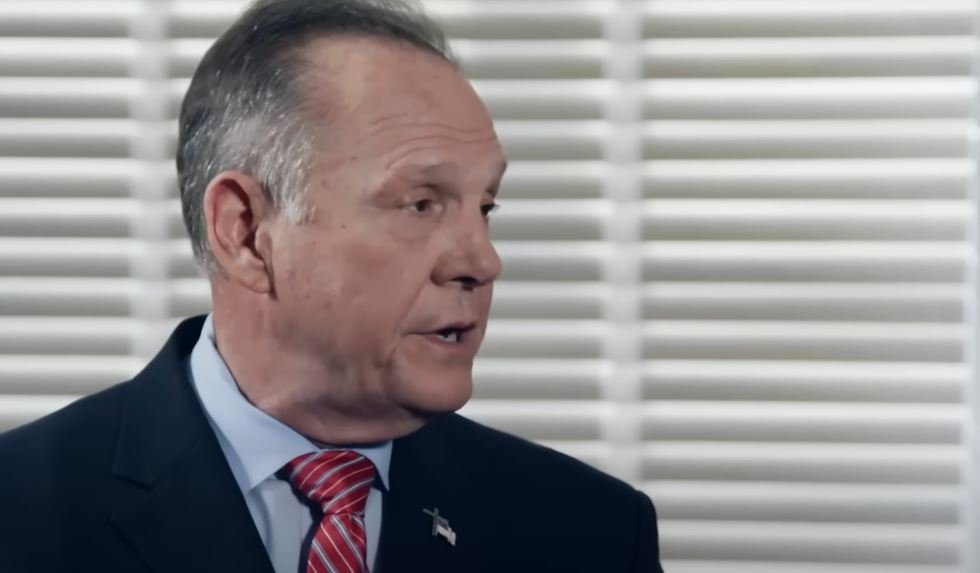
In Alabama, Doug Jones‘ triumph over Roy Moore was more than just a test of party allegiance; it was a striking example of what occurs when Black women band together, organize, and ultimately shape their state’s destiny. They achieved a result that was remarkably similar to the echoes of previous civil rights fights, against prevailing odds, demonstrating once more that even the most inflexible political presumptions can be overturned by collective action.
Black women did not show up at polling places by accident. Organizers put in months of incredibly hard work, enrolling neighbors, setting up rides, and emphasizing that their voices would not be disregarded. Their appearance in the voting booth was not by chance; rather, it was the result of careful construction, much like a bridge that was strengthened stone by stone until it could support the weight of a whole movement. Because of its accuracy, Alabama—a state that Democrats frequently view as politically untouchable—became a ray of hope.
Key Information on the Roy Moore Defeat
| Category | Details |
|---|---|
| Election | Alabama Special Senate Election, December 2017 |
| Winner | Doug Jones (Democrat) |
| Loser | Roy Moore (Republican) |
| Black Voter Turnout | About 30% of electorate |
| Black Women’s Support | 98% voted for Doug Jones |
| Black Men’s Support | 92% voted for Doug Jones |
| White Women’s Support | 65% voted for Roy Moore |
| Impact | First Democratic Senate win in Alabama since 1992 |
| National Significance | Seen as a referendum on Trump’s backing and women’s leadership |
| Reference | CBC – Why Black Women Got the Vote Out to Defeat Roy Moore (https://www.cbc.ca/radio/thecurrent/it-s-about-saving-themselves-why-black-women-got-the-vote-out-to-defeat-roy-moore-1.4447374) |
The magnitude of their choice was reflected in exit polls, which showed that 92 percent of Black men and 98 percent of Black women voted for Jones. Particularly considering the atmosphere of fear and voter suppression that had long afflicted black communities in the South, this allegiance was noticeably better than in prior election cycles. They achieved a very narrow victory margin thanks to their exceptionally effective and efficient efforts.
Despite being plagued by accusations of sexual misbehavior, Roy Moore was able to garner a significant amount of support from white voters, including almost two-thirds of white women. However, Black women’s discipline was what made the difference. Their involvement turned into a symbolic critique of Moore as well as a political culture that frequently brushed aside their issues as unimportant. They turned into the decisive designers of Alabama’s story at that precise moment.
The similarities to previous cultural movements were especially noticeable to many onlookers. Alabama’s women, who were mostly headed by Black voters, rendered their own verdict on integrity at the same time as the #MeToo reckoning was compelling Hollywood, politicians, and the media to face long-ignored misdeeds. Their choice was morally dubious, just like when public leaders challenge authority. The message was clear: disrespect, corruption, and wrongdoing would not be accepted any more.
For many, the impact was also quite personal. The effort was characterized as survival-driven by grassroots activists. One organizer stated, “It’s about saving themselves,” emphasizing that their involvement was a direct defense against leaders who endangered their future and sense of dignity in addition to being a civic obligation. Because it moved the emphasis from abstract politics to immediate self-preservation, this clarity of purpose was especially novel.
Politicians, journalists, and celebrities across the country hurried to express gratitude to Black women. Though tributes poured in and hashtags went viral, many campaigners felt that thanks was not enough. Respected advocate Leslie Mac described such gratitude as meaningless in the absence of funds, resources, and true representation. The appeal was echoed by Kamala Harris, a rising senator at the time, who urged institutions to address structural problems like underrepresentation in office, housing insecurity, and salary disparities. There was a very obvious consensus: Black women should be promoted as leaders on a regular basis, not just when their votes save democracy.
The cultural effects were not limited to Alabama. Entertainment personalities such as Beyoncé and Oprah Winfrey have already demonstrated how Black women are redefining media and music narratives. Serena Williams’ fortitude in athletics represented tenacity in the face of institutionalized skepticism. These cultural victories seemed to have a political counterpart in Alabama’s election, which once again demonstrated that Black women were not just participants but leaders.
Donald Trump received an indisputable warning for his endorsement of Moore in spite of the accusations. Although strong among some groups, his influence was greatly diminished in Alabama, where women, particularly Black women, made their own decisions. The outcome provided an early model for using controlled turnout to thwart presidential endorsement. It was a methodical, extremely effective use of votes rather than a protest march or a spectacular media show.
Activists warned against romanticizing the result, nevertheless. All too frequently, Black women’s devotion is overlooked when formulating policies but celebrated after elections. More than just token acknowledgment is needed for real improvement; funding for grassroots networks, leadership development programs, and laws that actually enhance people’s lives is also necessary. If not, the cycle of thankfulness without improvement keeps happening.
However, Alabama showed that when people organize with urgency and purpose, seismic transformations can happen even in the most conservative states. It dispelled the notion that change is inevitable and demonstrated that perseverance and discipline can bring about change. The lesson was especially helpful to the Democratic Party: treat Black women as partners in leadership and policymaking, not merely as votes to be courted.
