

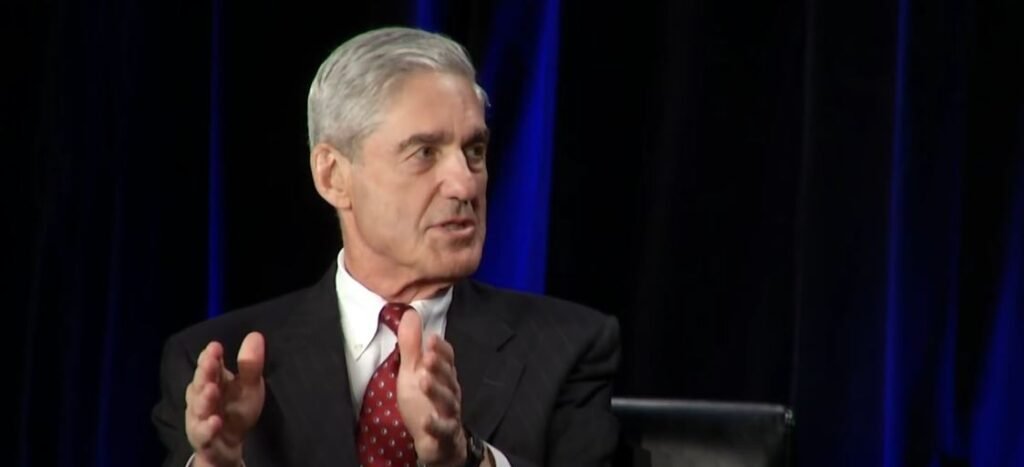
On May 29, 2019, Robert Mueller made his resignation as special counsel known in a statement that was incredibly straightforward, purposefully brief, and amazingly successful in refocusing the discussion away from him and onto his report. After two years of intense scrutiny, speculation, and quiet, he went aside, leaving behind a 448-page document that represented both the successes and the limits of his office. That day, he said only three things: the inquiry was finished, the office was shutting, and he was going back to his private life. Yet those statements held far more weight than their brevity suggested.
Mueller appeared nearly sphinx-like for a large portion of his term, letting others talk while staying in the background. By the time he reached the podium, his reticent demeanor was eerily reminiscent of the discipline he had demonstrated while serving as a Marine in Vietnam. His resignation was not spectacular; it was exceedingly efficient, aiming to highlight that the report was his final statement. This restraint was especially helpful to many Americans, strengthening their faith in his objectivity. It left unanswered questions in the air and was annoyingly cautious for others.
Bio Data and Professional Information
| Category | Details |
|---|---|
| Full Name | Robert Swan Mueller III |
| Date of Birth | August 7, 1944 |
| Place of Birth | New York City, USA |
| Education | Princeton University (BA), New York University (MA), University of Virginia (JD) |
| Occupation | Lawyer, Former FBI Director, Former Special Counsel |
| Major Roles | 6th Director of the FBI (2001–2013), Special Counsel for the U.S. DOJ (2017–2019) |
| Military Service | U.S. Marine Corps, Captain, Vietnam War Veteran |
| Military Honors | Bronze Star with “V” Device, Purple Heart, Navy Commendation Medal |
| Family | Married to Ann Cabell Standish, two daughters |
| Political Affiliation | Republican (Registered in Washington, D.C.) |
Mueller’s retirement signaled the end of one of the most consequential investigations of modern times. Appointed after President Trump ousted FBI Director James Comey, he held the task of researching Russian intervention in the 2016 election and any possible ties to the Trump campaign. He indicted 13 Russian nationals and 34 people over the course of two years, including some close to the president. The report listed eleven instances where obstruction of justice may have happened but determined that there was not enough evidence to pursue conspiracy. By quitting, Mueller essentially shifted the responsibility to Congress, suggesting—without ever saying outright—that it was on to lawmakers to act.
Calls to have him testify increased in the days before his departure. Yet his message was extraordinarily clear: “The report is my testimony.” This choice to eschew the political theater of hearings was significantly different from predecessors like Archibald Cox during Watergate. Mueller declined to be categorized as a villain or a hero. Instead, he embodied a uniquely new model of public service: one that avoided spectacle, even when spectacle appeared necessary.
Reiterating his stance of “no collusion, no obstruction,” Trump, as expected, hailed the resignation as vindication. The White House press secretary highlighted Mueller’s recognition that the attorney general had behaved in good faith. With the noteworthy exception of Justin Amash, Republicans echoed the president’s story. Democrats countered that Congress was required by the Constitution to address the obstruction evidence. Thus, Mueller’s resignation constituted a turning moment that heightened discussion without settling it.
His departure, both in timing and manner, was equally telling. Mueller had already threatened to resign twice in his tenure, the first time in 2004 during a disagreement over domestic surveillance activities. His strong adherence to principles was demonstrated by those earlier instances, which demonstrated that he was prepared to leave rather than jeopardize his integrity. His 2019 resignation was different; it was not a protest but a conclusion. However, it conveyed the same sense of responsibility, showing that resignation may occasionally make a strong statement on its own.
By retiring, Mueller joined a string of figures whose exits influenced American history. Watergate was defined by Archibald Cox’s departure in 1973. The dismissal of James Comey in 2017 changed the course of Trump’s presidency. Mueller’s departure was less spectacular but had a very broad meaning. It was closure to some. To others, it was unfinished business. In any case, it solidified his reputation as a person who characterized a time by exercising measured restraint rather than making loud declarations.
Mueller’s career trajectory—Marine, prosecutor, FBI director, and eventually special counsel—makes his retirement even more meaningful. He had lived through many administrations, appointed and reappointed by presidents from both parties. His service was not related to ideology but to institutions. Therefore, even during a period when institutions felt under attack, his retirement was a defense of institutional accountability.
His departure had a profound effect on society. It significantly raised awareness of the lines separating political accountability from legal conclusions. By refusing to exonerate Trump while also not prosecuting him, Mueller exposed the limits of judicial systems when applied to presidents. Americans were compelled by his resignation to consider whether the public, Congress, or the courts should be in charge of accountability. That question continues to affect debates about democracy, openness, and the rule of law.
Commentators from throughout the world viewed Mueller’s departure as a symbol of American tenacity. Despite political division, impartial investigation has been permitted to conclude, according to European media. Mueller’s departure stood out as a reminder that democratic institutions may still produce independent voices dedicated to process rather than personality in the face of growing populism around the world.
For Mueller personally, the resignation completed a long chapter of public life. Respected for years of legal service and recognized for combat valor, he departed with dignity at the age of 74. In addition to being incredibly consistent with his career, his declaration that he would not speak further was annoyingly evasive. He had done all he could, leaving the rest to others, like a soldier leaving the battlefield.
