Credentialed Out: How Occupational Licensing Laws Are Locking Women Away from the Trades That Pay

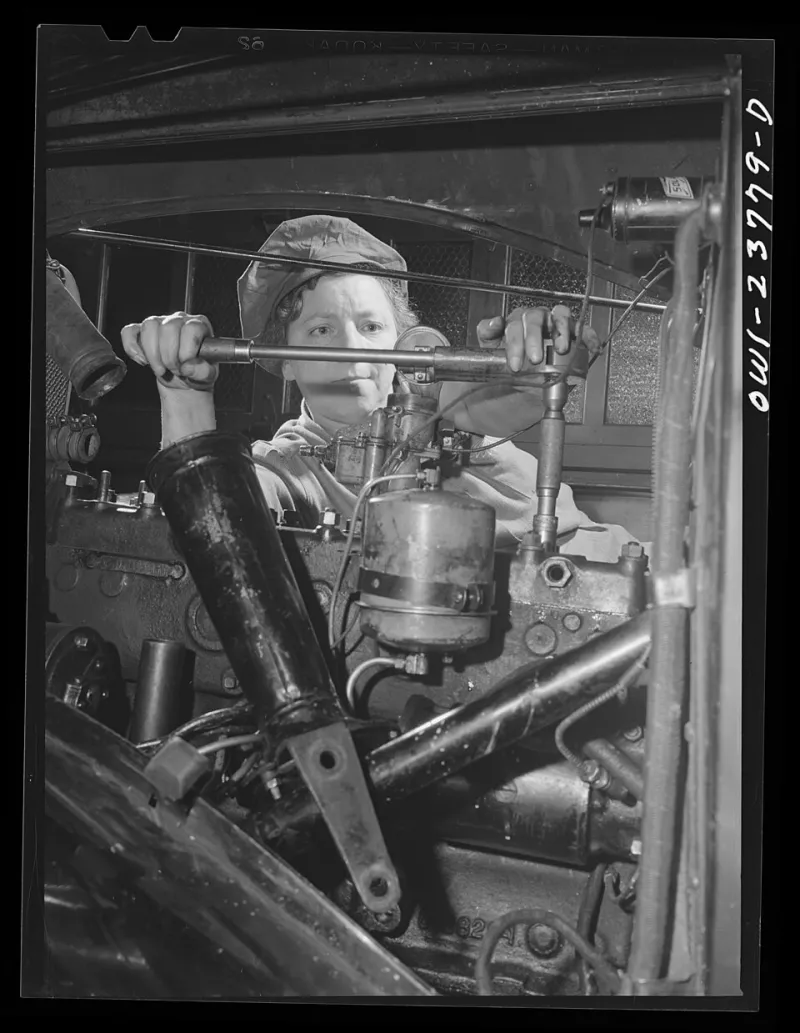
Photo: woman electrician working on wiring panel professional trades, via img.freepik.com
There is a particular kind of frustration that comes from being told you are not qualified for work you are entirely capable of performing. For thousands of American women attempting to enter the skilled trades, that frustration is not abstract—it is written into state statute, codified in licensing boards, and enforced by regulatory bodies that frequently have more to do with protecting incumbent workers than protecting consumers.
The skilled trades—electrical work, plumbing, HVAC installation and repair, welding, and similar vocations—represent some of the most financially rewarding careers available to Americans without a four-year college degree. Median wages for electricians exceed $60,000 annually, and experienced master plumbers in high-demand markets routinely earn six figures. These are careers that offer genuine economic independence, flexible scheduling, and the kind of tangible, irreplaceable skill set that cannot be outsourced or automated away. They are also careers from which women remain dramatically underrepresented, comprising fewer than three percent of electricians and plumbers nationally, according to Bureau of Labor Statistics data.
The reasons for that disparity are numerous and complex, but one factor deserves far more scrutiny than it typically receives: the occupational licensing regime that governs entry into these fields.
The Anatomy of a Licensing Barrier
On its surface, requiring an electrician to hold a license seems entirely reasonable. Electrical work involves genuine safety risks, and consumers deserve some assurance of competency. But the structure of most state licensing requirements extends well beyond any rational connection to safety or skill verification.
In many states, obtaining a journeyman electrician license requires between four and five years of apprenticeship hours—often totaling 8,000 hours or more—before a candidate is even eligible to sit for a licensing examination. Advancing to a master electrician credential, which is required to operate independently or run a business in most jurisdictions, can demand an additional two to four years of documented experience on top of that. The entire process, from initial apprenticeship to independent licensure, can consume nearly a decade.
For a woman who enters the trades in her mid-twenties—perhaps after a stint in another field, or after raising children through their early years—that timeline is not merely inconvenient. It is economically prohibitive. It delays income, delays business ownership, and delays the accumulation of professional credibility that comes with holding a master's credential.
The Institute for Justice, which has conducted extensive research on occupational licensing, has documented that the average licensed occupation in the United States requires more than a year of education and experience before a license is granted. Critically, their research also demonstrates that in most cases, there is little to no evidence that these requirements improve public safety outcomes or service quality. What they do reliably accomplish is reducing competition and raising prices—outcomes that benefit established practitioners far more than consumers.
States Where the Barriers Are Steepest
Not all states impose equally burdensome licensing structures, but several stand out for the particular severity of their requirements. California, Illinois, and New York—states that frequently present themselves as champions of working people—maintain some of the most restrictive and time-consuming licensing pathways in the country for electrical and plumbing trades.
California's Contractors State License Board requires electrical contractors to demonstrate four years of journeyman-level experience before applying for a C-10 electrical contractor license. Illinois mandates extensive apprenticeship hours and written examinations administered through a patchwork of local licensing jurisdictions, meaning that a license obtained in Chicago may not transfer to a neighboring municipality—a portability problem that disproportionately affects workers who move for family reasons, a demographic that skews female.
Louisiana, long identified by the Institute for Justice as one of the most heavily licensed states in the nation, imposes licensing requirements on over 70 occupations—a figure that exceeds nearly every other state. The cumulative effect of such requirements is a labor market where entry is controlled not by merit, but by endurance through a bureaucratic gauntlet.
By contrast, states like Arizona have made meaningful progress in reducing unnecessary licensing burdens, including passing legislation that allows workers licensed in other states to receive reciprocal recognition without redundant credentialing. These reforms matter enormously for women who relocate—whether following a spouse's career, returning to a home state to care for aging parents, or simply seeking better opportunities.
Women Fighting Back
Despite these structural obstacles, a growing number of women are refusing to accept the licensing regime as immovable. Their stories are worth telling.
In Tennessee, a woman named Rachel—a former logistics coordinator who retrained as an HVAC technician in her early thirties—found that her state's licensing board had no formal mechanism for recognizing the competency she had developed through an accelerated trade school program and two years of documented field work under a licensed contractor. The board's response was to direct her back to the beginning of the apprenticeship queue. She ultimately relocated to a state with a more accommodating reciprocity framework, launched her own HVAC service company, and now employs three people.
Her case is illustrative rather than exceptional. Across the country, women in the trades describe a credentialing culture that feels designed to exhaust rather than evaluate—one that measures time served rather than competency demonstrated.
Organizations including Women in HVACR and the National Association of Women in Construction have begun advocating not only for cultural inclusion within the trades, but for structural reform of the licensing systems that create unnecessary barriers to entry. Their argument is straightforward: if the purpose of a license is to verify that a practitioner can perform work safely and competently, then the pathway to that license should test exactly those capacities—not the ability to accumulate years of documentation.
The Liberty Argument That Feminism Should Embrace
There is a tendency in mainstream feminist discourse to treat occupational regulation as a worker-protective measure and to resist any critique of licensing as an attack on labor standards. That framing is both intellectually lazy and strategically self-defeating for women seeking economic advancement.
The skilled trades licensing regime does not protect women. It excludes them. It concentrates economic opportunity in the hands of those who entered the system earliest—a cohort that, by historical accident and deliberate exclusion, is overwhelmingly male. Defending that system in the name of worker protection is not feminism; it is the preservation of a status quo that has never served women's interests.
Real economic empowerment for women in the trades requires confronting the gatekeeping function that licensing boards have assumed. It requires demanding that states adopt competency-based testing in place of time-based apprenticeship mandates, that reciprocity agreements be broadened so that a license earned in one state is honored in another, and that the burden of proof be placed on those who wish to maintain a licensing requirement—not on the women trying to enter a field.
The women who are building their own businesses, training the next generation of tradeswomen, and refusing to wait out decade-long credentialing timelines are not asking for special treatment. They are asking for a system that evaluates them on what they can do rather than on how long they have waited. That is not a radical demand. It is a foundational one.
And it is precisely the kind of demand that a genuine commitment to liberty—for women and for all Americans—requires us to take seriously.