She Built This Republic: The Unsung Women Who Made American Liberty Possible
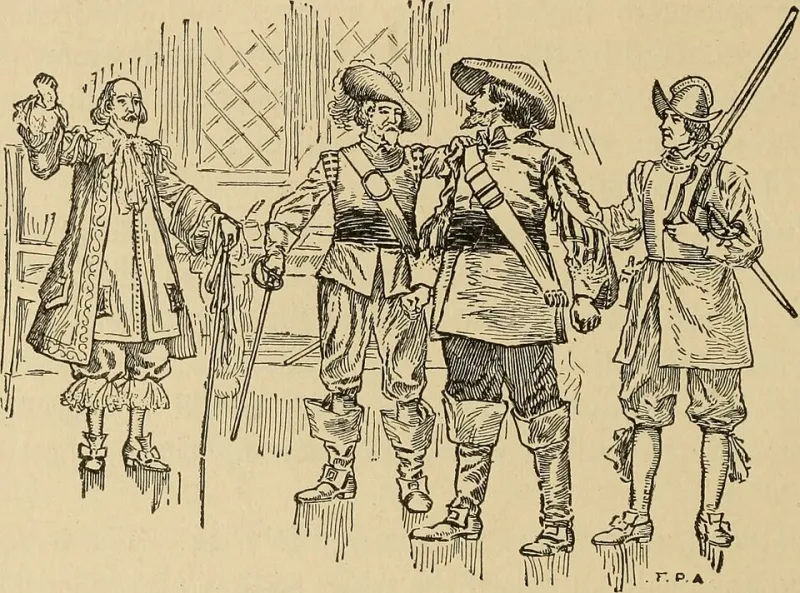
Photo: "F.P.A." (artist) via Oscar Gerson (via Internet Archive Book Images), CC0, via Wikimedia Commons
There is a persistent and deeply unfair myth embedded in the popular telling of American history: that women arrived late to the project of liberty. That political engagement, civic courage, and the willingness to sacrifice for freedom were masculine virtues first claimed by women only generations after the Republic was established. That myth is not merely incomplete—it is a disservice to the extraordinary women who bled, organized, spied, and argued their way into the very bones of this nation.
The American Revolution was not won solely on battlefields. It was won in parlors, in letters, in markets, and in whispered intelligence passed between neighbors. Women were present at every stage of that struggle, and their contributions demand not just acknowledgment, but genuine reverence from every woman who today calls herself a lover of liberty.
Abigail Adams: The First Political Strategist in the Executive Household
When historians speak of John Adams, they often neglect to mention that his most incisive political advisor wore a dress. Abigail Adams was not a passive observer of her husband's career—she was its most demanding intellectual partner. Her famous 1776 letter urging John to "remember the ladies" in the formation of new laws is frequently cited as an early feminist appeal, but its significance runs far deeper than a single quotation.
Abigail Adams engaged in substantive, rigorous correspondence on matters of taxation, constitutional structure, foreign policy, and the moral contradictions of a liberty-seeking nation that permitted slavery. She understood political philosophy not as an abstraction but as a living framework with immediate consequences. She lobbied, she argued, and she held her husband accountable to the principles he publicly championed. She was, in every meaningful sense, a political force—operating through the only channels available to women of her era with extraordinary effectiveness.
Her example is not simply a historical curiosity. It is a reminder that women's political engagement is not a modern innovation grafted onto an otherwise male tradition. It is woven into the Republic's very origins.
The Daughters of Liberty: Economic Warfare as Patriotic Duty
Before the first musket fired at Lexington and Concord, American women had already launched an economic resistance campaign of remarkable sophistication. The Daughters of Liberty, organized in the 1760s and 1770s, understood something that modern liberty advocates still recognize as profoundly true: economic autonomy is inseparable from political freedom.
In direct response to British taxation on imported goods—particularly tea and cloth—these women organized spinning bees, producing homespun fabric to replace British textiles. They publicly pledged to boycott taxed goods, and they enforced those boycotts through social pressure and community organization. Their activism was not symbolic. It was a deliberate, coordinated act of economic defiance that struck at the financial infrastructure of colonial dependence on British trade.
They recognized that consumer choice was a political act. That where one spent one's money was a declaration of values. That self-sufficiency was not merely practical but philosophically essential to the cause of liberty. These are not antiquated ideas—they are principles that resonate powerfully in an era when government overreach into markets, commerce, and personal economic decisions continues to threaten individual freedom.
Spies in Petticoats: The Female Intelligence Networks of the Revolution
Perhaps no chapter of women's revolutionary contribution is more dramatic—or more thoroughly buried—than the role women played in military intelligence. Because women were largely invisible to British officers as political actors, they moved freely in ways that their male counterparts could not. They listened. They observed. And they delivered information that shaped the course of the war.
Agent 355, a member of the Culper Spy Ring operating in British-occupied New York, remains one of the most tantalizing figures in American intelligence history. Her true identity has never been definitively established, which speaks to both the danger of her work and the deliberate erasure of women's contributions from the historical record. She passed critical intelligence to George Washington, information that historians believe contributed directly to the exposure of Benedict Arnold's treachery.
Lydia Darragh of Philadelphia provides another vivid example. In December 1777, she overheard British officers planning a surprise attack on Washington's troops at Whitemarsh and risked her life to carry that intelligence through British lines. Her warning allowed Washington to prepare his defenses, and the British advance was repelled. She was a Quaker mother operating in occupied territory. She was also, by any honest measure, a hero of the American Revolution.
Mary Katharine Goddard, publisher of the Maryland Journal, printed the first copy of the Declaration of Independence that included the names of all signatories—a genuinely dangerous act, as those names were then targets for British arrest. She did not merely support the cause; she staked her life and livelihood upon it.
Deborah Sampson: When Conviction Demanded the Ultimate Sacrifice
For those who still imagine that women's participation in the Revolution was confined to domestic or social spheres, the story of Deborah Sampson demands a reckoning. Sampson disguised herself as a man, enlisted in the Continental Army under the name Robert Shurtliff, and served for over a year before her identity was discovered. She was wounded twice—once removing a musket ball from her own leg to avoid medical examination that would expose her. She received an honorable discharge and later became the first woman in American history to receive a pension for military service.
Sampson did not fight because she was compelled to. She fought because she believed in the cause of liberty with a conviction so fierce that no social convention could contain it. Her story is not an anomaly. It is an expression of the same spirit that animated the Daughters of Liberty, Abigail Adams, Lydia Darragh, and countless other women whose names we do not know because history was not yet in the habit of recording them.
Reclaiming Our Inheritance
For women who today advocate for liberty—who believe in limited government, individual rights, free markets, and the foundational principles enshrined in the Constitution—the women of the American Revolution are not distant historical figures. They are direct ancestors in the most meaningful sense: predecessors in the same cause, operating with the same convictions, at far greater personal cost.
The narrative that women's political engagement is a recent development, a concession won through progressive activism in the twentieth century, is a narrative that serves those who wish to minimize the depth and legitimacy of women's attachment to founding principles. It is a narrative worth rejecting firmly and completely.
Women did not wait to be invited into the American experiment. They helped design it, sustain it, and defend it from the very beginning. Every woman who stands today in advocacy for liberty, who speaks at a town hall or writes to her representative or builds a business free from unnecessary interference, stands in a tradition that is older than the Constitution itself.
That is not a modern addition to American liberty. That is American liberty, as it was always meant to be.