

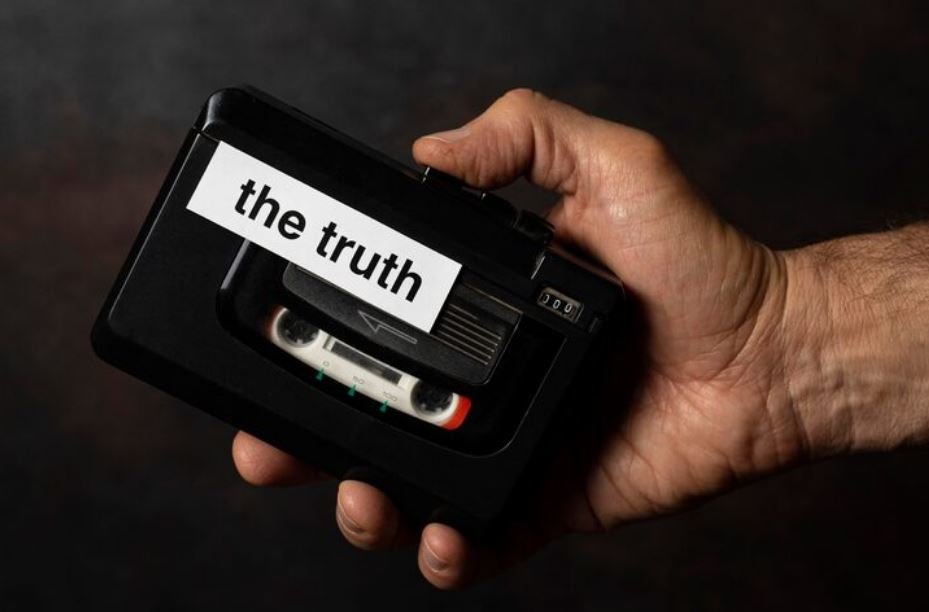
The peculiar situation of declining trust in American media has developed slowly but firmly, remarkably like the way erosion occurs on a coastline: slowly at first, then visibly as the foundation deteriorates. Nearly three-quarters of Americans in the early 1970s thought that radio, television, and newspapers covered the news completely and fairly. Today, only about one-third of Americans still hold that opinion, and more publicly express that they have “no trust at all.”
This retreat is not an abrupt collapse, but rather the result of a perfectly orchestrated combination of political attacks, economic pressures, and technological advancements. Senior NPR editor Uri Berliner explained how once-inquisitive spaces grew more constrained, representing the worldview of a select few instead of the diverse range of people that public radio once sought to reach. Audiences who had sensed this change long before insiders acknowledged it found resonance in his remarkably clear words.
Key Facts on U.S. Media Trust
| Attribute | Details |
|---|---|
| Issue | Vanishing trust in U.S. media institutions |
| Current Trust Level | 31% of Americans express a fair amount or greater confidence (Gallup, 2024) |
| Historical Peak | 68–72% trusted the media during the 1970s |
| All-Time Low | 39% of Americans reported “no trust at all” in 2024 |
| Partisan Divide | 54% of Democrats trust media, compared with only 12% of Republicans |
| Notable Voices | Uri Berliner (NPR editor), Danielle K. Brown (Michigan State University) |
| Driving Trends | Decline of local news, rise of platforms, reliance on social influencers |
| International Standing | U.S. ranks lower than 46 other countries in media trust |
| Social Impact | Rising news avoidance, increasing polarization, alternative messengers |
| Reference | Gallup – Americans’ Trust in Media (news.gallup.com) |
Compared to national anchors or publishers, trust in local leaders and even neighbors has significantly increased over the last ten years. Black communities in Detroit and Minneapolis are increasingly turning to prominent, dependable, and stance-taking individuals—whether local activists or well-known broadcasters—because they feel so adaptable in tackling issues that directly impact those communities, according to research by Danielle K. Brown. Trusted messengers feel very effective as sources of important news because, in contrast to disinterested institutions, they disclose emotions, take sides, and engage consistently.
The partisan divide has widened. While independents hovered in the twenties, remarkably similar to their record lows, Gallup found that only 12% of Republicans expressed confidence in mass media in 2024, compared to over half of Democrats. These figures structure how various groups absorb information, going beyond simply reflecting attitudes. Liberals tend to favor legacy media, while conservatives tend to use talk radio or digital-first websites. In addition to polarization, the outcome is a shattered sense of reality, with two readers of the same event experiencing completely different accounts.
The crisis has been made worse by financial decline. Local newspapers used to be incredibly resilient defenders of public trust, but their demise has drastically diminished daily accountability and investigative reporting. Platforms that have particularly creative algorithms for increasing clicks and outrage have stepped into that void. These platforms are surprisingly inexpensive for customers in terms of money, but expensive in terms of truth. More often than not, this dynamic has turned news into commentary rather than reporting, as many readers naturally perceive.
Mistrust is accelerated by failures. Even the most reputable publications can come across as irresponsible, as demonstrated by the New York Times’ correction following its initial coverage of the hospital explosion in Gaza. The editors’ note acknowledged that it relied on unsubstantiated claims, and even though the error was fixed in a matter of hours, the harm persisted. Such mistakes feel very trustworthy as evidence of bias to audiences who are already doubtful.
The trend was exacerbated by political figures. Similar to Richard Nixon’s rants against elites, Donald Trump’s frequent use of the term “fake news” was remarkably successful in igniting skepticism. However, the distinction is glaringly obvious: Nixon’s time gave rise to investigative successes, whereas Trump’s years left public trust in journalism sharply eroded, especially among conservatives.
News fatigue has also been a major factor. Only 38% of Americans paid close attention to news in 2022, according to Pew surveys, compared to over half in 2016. Many people are exhausted from constant notifications, unrelenting crises, and the never-ending cycle of commentary instead of new reporting. Some people find that tuning out is a very effective way to protect themselves. However, democracy suffers when citizens stop participating because collective decision-making depends on shared facts.
The sense of crisis is heightened by international comparisons. The US has a lower media trust rating than 46 other countries, including democracies with thriving partisan media but higher overall credibility. This is especially harmful in the context of global governance since it makes it harder for America to set an example of accountability and transparency. Ironically, the system as a whole feels vulnerable once silence descends, much like a watchdog losing its bark.
Nevertheless, there is still hope. Regaining slivers of public trust has been remarkably successful thanks to subscription-driven models, partnerships between local newsrooms and universities, and nonprofit investigative platforms like ProPublica. Particularly creative steps toward reconciliation include bold engagement with underrepresented voices, diversity in newsroom leadership, and transparency in corrections. Today, some media outlets give audiences a very clear picture of the reporting process by openly disclosing not only what they reported but also how.
In the end, the peculiar situation of declining trust can be reversed as long as news organizations adopt humility, put money back into accuracy, and consistently interact with communities. Media credibility can be restored by being significantly more transparent, remarkably adaptable in storytelling, and remarkably resilient in defending facts against the storm of misinformation, much like trust in a personal relationship can be rebuilt through actions rather than promises.
