

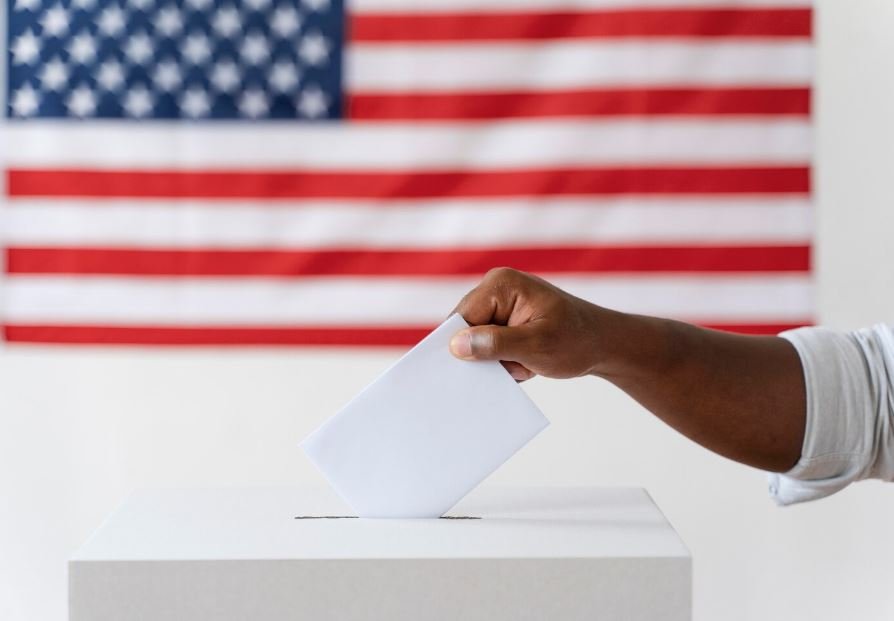
Voter fraud in Alabama is now more a reflection of the nation’s complex relationship with democracy than it is a question of statistics. The word itself is powerful, evoking memories of contentious elections, acrimonious legal disputes, and the never-ending struggle between those calling for increased security and those seeking more freedom. Alabama has once again been under scrutiny in recent months due to fresh incidents from Phenix City to Montgomery, serving as a test site for how the country responds to misbehavior and distrust.
A particularly prominent case is the detention of two ladies in Phenix City in August. They allegedly harvested absentee ballots in order to support a local council candidate, according to the authorities. Even though their acts were small-scale, they instantly generated intense discussion. Proponents of stringent enforcement contended that it exposed weaknesses in mail voting, while detractors contended that emphasizing isolated transgressions exacerbates anxiety instead than tackling structural problems. The case turned into a little stage play that represented a greater narrative about the resilience of democracy against both manipulation and exaggeration.
Key Information on Alabama Voter Fraud
| Category | Details |
|---|---|
| Allegations | Absentee ballot fraud, false identity registration, voter roll purges |
| Recent Arrests | Two women charged in Phenix City absentee ballot case, 2025 |
| High-Profile Case | Former lawmaker convicted of ballot fraud in 2023 |
| Federal Action | DOJ lawsuit against Alabama for voter roll purge violations in 2024 |
| Voting Rights Suits | League of Women Voters and SPLC filed challenges to restrictive measures |
| Convictions | Several, including absentee ballot fraud conviction in 2025 |
| Reporting Methods | Online form, hotline 1-800-274-VOTE, fax, or postal mail submissions |
| Oversight Agencies | Alabama Secretary of State, Attorney General, Department of Justice |
| Broader Impact | Raised mistrust, fueled lawsuits, debates over ballot access vs. election integrity |
| Reference | Alabama Secretary of State – Stop Voter Fraud Now (https://www.sos.alabama.gov/alabama-votes/stop-voter-fraud-now) |
Alabama’s position in the story was further enhanced by federal scrutiny. The state was charged by the Department of Justice in late 2024 with illegally removing voters off the rolls during the ninety-day quiet period preceding a federal election. Supported by organizations like the Southern Poverty Law Center and the League of Women Voters, that lawsuit brought to light a crucial reality: election mechanics are not just technical procedures but also profoundly human ones. Many naturalized citizens who were mistakenly flagged found that getting letters challenging their status was an alarming challenge to their American identity rather than a bureaucratic annoyance.
Two years after taking the oath of loyalty with pride in 2022, a Dutch citizen unexpectedly found himself in danger of losing his right to vote. His narrative demonstrates how technical decisions affect people’s daily lives and erode trust before a single vote is cast. By concentrating on these people instead of impersonal data, the Alabama dilemma shifts from being about numbers to being about trust, which is what keeps the political system whole.
Alabama has also seen ambitious people transgress moral boundaries. In 2025, county commission candidate Terry Andrew Heflin acknowledged that he had diverted someone else’s absentee ballot in order to cast his own ballot. Prosecutors highlighted that the symbolic theft was enormous, even though the act really only included one vote. Even though a single stolen ballot might not decide an election, it can severely undermine community trust. Just as a single corporate financial crisis damages a company’s reputation, one tainted ballot damages the public’s perception of justice.
Voter fraud is a felony that the Alabama Secretary of State’s office consistently emphasizes it does not condone. Vigilance is the greatest defense, and this message is strikingly consistent across the various channels available to residents to report problems, from handwritten letters to toll-free calls. However, civil rights activists contend that the same office has occasionally taken actions that have more of an impact on suppressing legitimate voters than preventing fraud. Similar to travelers attempting to believe a pilot who is continuously warning of turbulence, this paradox leaves regular people juggling contradicting messages.
The argument is eerily reminiscent of arguments in sports or entertainment, when years of success can be overshadowed by a single scandal. A high-profile incident in Hollywood or a single doping case in sports raises questions about entire businesses. Every purge or fraud case in Alabama’s election scandals intensifies the feeling that something bigger and more sinister might be hiding behind the scenes.
However, the conversation does not have to be in a completely negative tone. Efforts to improve the accessibility, security, and transparency of elections are extremely successful. The function of technology is becoming more and more complex. More quickly than ever before, advanced data analytics can identify odd voting trends, opening the door of preventing wrongdoing before it gets out of hand. However, the dissemination of false information on the internet happens much more quickly than fact-checking initiatives, creating problems that resemble battling a wildfire with buckets of water. Many experts contend that improving systems to make them more dependable and efficient is the answer rather than limiting access.
What is particularly reassuring is how resilient voters are. Voters continue to turn out in spite of coercion, legal action, and perplexing procedures. Similar to how communities come together following natural disasters, Alabamans have shown that their faith in the vote is still stronger than efforts to dissuade them from voting. This conclusion provides the strongest proof that democracy is remarkably resilient despite its fragility.
Voter fraud discussions in Alabama have merged with national politics in recent years. Alabama has become a case study and a talking point due to former President Donald Trump’s ongoing emphasis on mail-in voting, which has heightened concerns. However, there is a more intimate reality behind the speeches and legal actions: people want to feel as though their opinions are heard. Restoring the basic yet potent belief that voting still matters is the ultimate goal of every prosecution, lawsuit, and change.
The discussion around voter fraud in Alabama is about preventing mistrust from undermining the system itself as much as safeguarding elections from wrongdoing. Although it does occur, fraud is uncommon. However, the perception of fraud is pervasive and has the ability to undermine faith even more than the actual act. Alabama’s experience demonstrates that preventing illegal ballots is only one of the biggest challenges ahead; another is making sure that every eligible voter feels heard, respected, and safe.
