

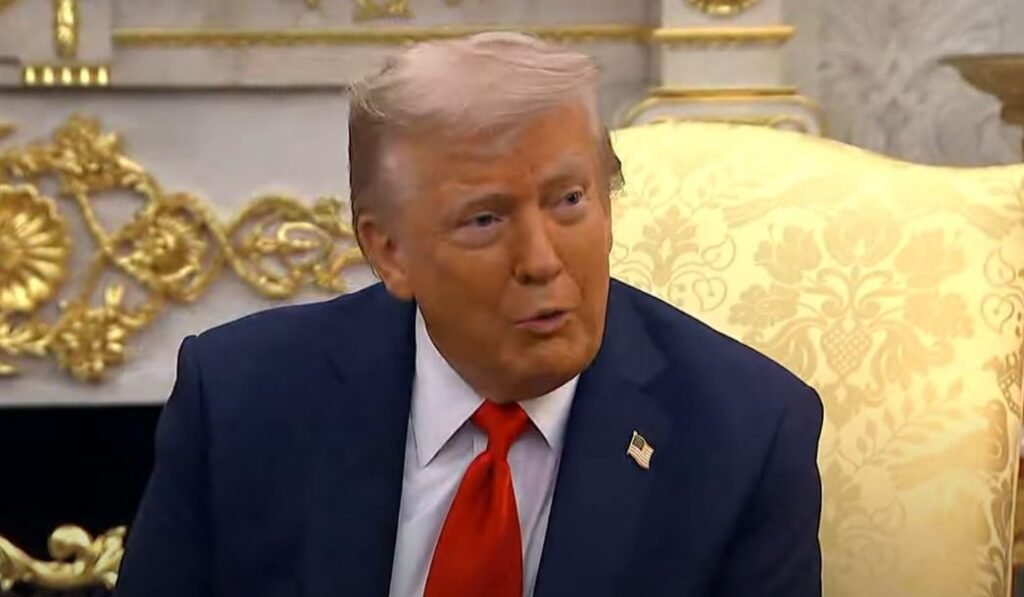
Because each award serves as a mirror reflecting how society currently views him, Trump’s win stories frequently feel less like everyday news and more like cultural milestones. From his first Humanitarian Award in 1976 to his 2024 Patriot of the Year honor, his career trajectory has been incredibly varied, encompassing politics, satire, philanthropy, and stardom. His accolades inspire conversations that are eerily similar to those surrounding other contentious people, where adulation and criticism combine, leaving no room for neutrality.
Trump was positioned amid American symbols of justice and cultural transformation when he was awarded the Ellis Island Medal of Honor in 1986, along with Muhammad Ali and Rosa Parks. This combination was especially creative, pointing to a time when his public image was still in line with aspirational and successful goals. Yet, decades later, his immigration policy stood in stark contrast to the spirit of Ellis Island, a contradiction that continues to be contested. In the case of Trump, awards frequently reflect both his personality and the conflicts ingrained in the national identity.
Bio Data and Personal Information
| Category | Details |
|---|---|
| Full Name | Donald John Trump |
| Date of Birth | June 14, 1946 |
| Place of Birth | Queens, New York City, USA |
| Education | Wharton School, University of Pennsylvania (B.S. Economics, 1968) |
| Occupation | Businessman, Politician, Television Personality |
| Political Career | 45th and 47th President of the United States |
| Major Awards | Ellis Island Medal of Honor (1986), Time Person of the Year (2016, 2024), Patriot of the Year (2024), Collar of Abdulaziz al Saud (2017), Order of Zayed (2025) |
| Entertainment Honors | Hollywood Walk of Fame (2007), WWE Hall of Fame (2013) |
| Honorary Degrees | Liberty University (Doctor of Business Administration, 2012; Doctor of Laws, 2017) |
| Controversial Awards | Golden Raspberry Awards (1990, 2019), Rosemary Award (2021) |
Award shows, like the 2024 Fox Nation Patriot of the Year, become theatrical platforms when Trump wins. He welcomes acknowledgment not as a quiet gesture but as a highly efficient rallying cry, validating his political narrative. His speeches are frequently full of hope, comparing his leadership to the tenacity of Americans and describing how amazingly successful it was in securing the country’s future. His strategy of incorporating campaign rhetoric into his acceptance speech sets him apart from previous presidents like George W. Bush and Bill Clinton, who tended to keep ceremony and policy distinct.
When compared to Trump’s satirical accolades, such the Golden Raspberry for Worst Actor in 2019, the contrast between his achievements is still striking. Many saw it as a joke, while his supporters saw it as just another symbol of his stubbornness. His remarkably diverse impact in politics, economics, and entertainment is shown by the contrast between somber honors, such as the Order of Zayed from the United Arab Emirates in 2025, and parody accolades. Rarely has a prominent figure held both a WWE Hall of Fame induction and significant international orders of distinction.
The discussion around Trump’s Nobel Peace Prize is arguably the best example of how honors have symbolic significance. The notion that he might become a laureate, like Roosevelt, Wilson, Carter, and Obama, is an example of how politics reshapes recognition. He was nominated for his contribution in Middle Eastern negotiations, especially the Abraham Accords. Trump’s reputation will benefit greatly if he receives a Nobel prize, which would recast his legacy as a negotiator who is recognized with promoting communication rather than merely a populist leader. Critics warn that such a step would be exceedingly controversial, yet it demonstrates how peace itself has been redefined in current politics.
His remarkable return was highlighted by Time Magazine’s 2024 Person of the Year award. The editors said he was planning “a once-in-a-generation political realignment.” This statement has been extensively used in recent days as proof of his capacity to bounce back from setbacks as serious as a felony conviction. Recognition of this nature positions him alongside individuals like Obama, Greta Thunberg, and Pope Francis, making clear that whether admired or opposed, his influence remains undeniable.
International honors also demonstrate Trump’s continued capacity to form alliances with influential people. Receiving the Collar of Abdulaziz al Saud in 2017 underlined his strategic alliance with Saudi Arabia, while the Order of Muhammad from Morocco in 2021 showcased his role in developing ties in North Africa. These honors are political declarations rather than merely ornaments, and they have significantly enhanced his diplomatic standing in areas where American influence is frequently viewed with suspicion. With these honors, Trump has combined statecraft and ceremony, transforming diplomacy into a theatrical act.
Not all forms of acknowledgment are flattering. His opposition to transparency was brought to light by his 2021 Rosemary Award, which was granted for the worst performance in open government. Reports of flushing documents and torn papers surfaced throughout that year, portraying him as contemptuous of responsibility. Yet, in an incredibly clear illustration of how controversy fosters history, the award simply strengthened the mystique around his presidency. Unlike many politicians who fade after leaving office, Trump remained solidly in headlines, his awards—both genuine and mocking—sustaining his cultural presence.
The way society has responded to Trump’s honors shows how recognition has changed throughout time. Awards today are less about quiet acknowledgment and more about contentious markers of identity. The stark divides that follow him are embodied by his placement on the Hollywood Walk of Fame, where he has been frequently vandalized but remains intact. As a cultural metaphor, it is incredibly resilient: revered by some, hated by others, yet unavoidable. This portrayal is further enhanced with each award, which tells not just his narrative but also the story of a culture that struggles with controversy, leadership, and celebrity.
