

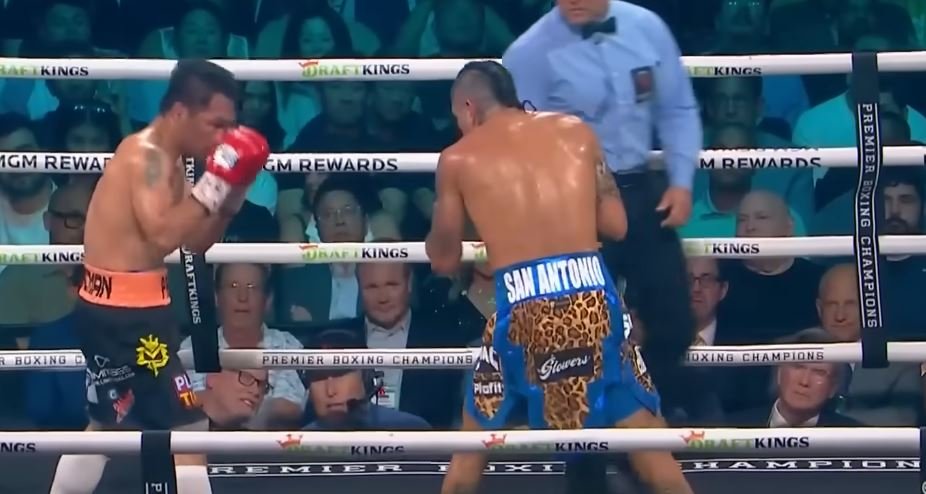
In addition to his WBC welterweight title, Mario Barrios walked into the ring at the MGM Grand Garden Arena bearing the expectation that this bout would change the course of his career. He made more money in a single night against Manny Pacquiao than he would have in years of arduous, consistent work in smaller arenas. His guaranteed purse was estimated to be between $500,000 and $1 million, but pay-per-view sales gave him a huge boost, bringing his total to almost $2.5 million. This was more than just a paycheck for Barrios; it was a game-changer that was incredibly successful in transforming him from a well-respected fighter into a household name.
A well-known tale in boxing is told by the disparity between Barrios’ earnings and Pacquiao’s incredible $20 million haul. Pacquiao attracted fans despite his advanced age of 46, demonstrating that legacy and charisma are just as important in determining financial success as titles. With career earnings of over half a billion dollars, boxing has allowed him to build an empire. Compared to Barrios, who had just started receiving millionaire paychecks, this fight significantly accelerated his ascent, demonstrating how one fight can drastically change the course of a career.
| Category | Details |
|---|---|
| Full Name | Mario Barrios |
| Nickname | El Azteca |
| Date of Birth | May 18, 1995 |
| Nationality | American (Mexican heritage) |
| Profession | Professional Boxer |
| Division | Welterweight |
| Career Record (2025) | 29–2–1 (18 KOs) |
| Fight vs Pacquiao | July 19, 2025 – MGM Grand Garden Arena, Las Vegas |
| Earnings vs Pacquiao | Approx. $2.5 million (including PPV share) |
The purse split also demonstrates how boxing’s business model depends on stardom rather than talent to generate income. Despite winning the title, Barrios, the younger champion, received much less money than Pacquiao, whose career record and cultural resonance guaranteed a huge payout. The format is eerily reminiscent of Floyd Mayweather’s bouts with lesser-known opponents like Andre Berto or Marcos Maidana, who won enormous sums of money just for taking the stage. Like those forerunners, Barrios used the Pacquiao fight as a springboard, securing his financial future for years to come.
When compared to his early career earnings, Barrios’ story is especially motivating. He continued to fight for amounts as low as $25,000 in 2018. His purses gradually increased over the ensuing years, reaching $1.5 million in 2021 during his matchup with Gervonta Davis. His earnings had significantly increased by the time he stood across from Pacquiao, and his net worth—which was estimated to be between $1.5 and $5 million—became more upscale as a result of this incident. Such advancements show how perseverance in boxing, a sport that is frequently extremely challenging, can ultimately lead to success.
Not only is the money helpful to Barrios, but the visibility is as well. Enticed by Pacquiao’s return, millions of people watched, and Barrios’ name was seen by people who might not have followed his prior bouts. Just as Ryan Garcia took advantage of crossover fame or Jake Paul used entertainment platforms, this exposure has made endorsement deals and sponsorship opportunities possible. Barrios’ marketability has been greatly increased, and in boxing, recognition frequently has just as much financial weight as titles.
The bout itself ended in a draw, protecting Barrios’ title and preventing the kind of harm that a defeat might have caused. The outcome was extremely effective in guaranteeing his future earning potential as well as his legitimacy as a champion. Even in his later years, Pacquiao proved to be a highly dependable commercial attraction, further solidifying his enduring ability to sell fights.
Spectators were fascinated by the difference in the two fighters’ purses. Although Pacquiao’s $20 million payout may seem enormous, it seems almost insignificant when contrasted with Canelo Alvarez’s impending $150 million guaranteed purse against Terence Crawford. However, this analogy only highlights the erratic economics of boxing, where narrative arcs, legacy, and timing produce outcomes that are especially inventive in their wealth distribution. This continuum is well-represented by Barrios’ bout with Pacquiao, which serves as a reminder that the financial stage of boxing is just as dramatic as the bouts themselves.
Looking back on his career, Barrios’ path exemplifies the broader trend of athletes becoming superstars through a single pivotal event. Similar to how Oscar De La Hoya went from being a promising fighter to a pay-per-view attraction or how Manny Pacquiao became a world-renowned figure after defeating Marco Antonio Barrera, Barrios now has the opportunity to build on this accomplishment. The Pacquiao fight has given him the opportunity to demand greater respect at the negotiating table, and his future paychecks will probably arrive much faster.
These kinds of spectacles also affect fans. Many compared discussions about equal pay in sports more generally to the fairness of the earnings gap. The conversation is particularly significant because it reflects societal discussions about financial reward, recognition, and opportunity. By its very nature, boxing still prioritizes celebrity over competition, which leads to inequalities but also gives fighters like Barrios the chance to advance to a higher level virtually immediately.
