

Aitana Bonmatí’s most recent contract extension has drastically changed expectations in elite women’s football during a time when financial equity in sports is growing. The 27-year-old Spanish midfielder allegedly earns more than €1 million a year, so by committing to stay at FC Barcelona until 2028, she not only confirmed her allegiance but also made history. This decision, which was quietly expected but had a significant impact, puts her ahead of all of her peers monetarily.
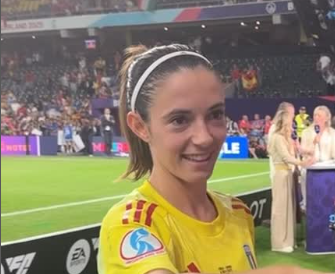
Bonmatí opted for tradition above innovation by staying in Catalonia in spite of approaches from some of the most ambitious football teams, such as Chelsea. Her choice comes as elite European teams are undergoing a dynamic transition, with the negotiating table becoming more and more like the men’s game—structured, combative, and incredibly successful at rewarding steady excellence. Notably, Chelsea was reportedly prepared to pay her previous €3 million release clause—a sum that, in the women’s market, had previously appeared unthinkable.
Aitana Bonmatí – Key Information
| Category | Information |
|---|---|
| Full Name | Aitana Bonmatí Conca |
| Date of Birth | January 18, 1998 |
| Age | 27 |
| Nationality | Spanish |
| Club | FC Barcelona Femení |
| National Team | Spain |
| Position | Midfielder |
| Contract Extension | Until 2028 |
| Estimated Salary | €1 million annually (approx. $1.1 million) |
| Release Clause (Old) | €3 million ($3.3 million) |
| Major Honors | 2023 Ballon d’Or Féminin, FIFA Best Player, UEFA Champions League, Liga F |
| Notable Recognition | Highest-paid player in women’s football history |
| Verified Source |
In addition to preventing a drastic change in the balance of women’s football in Europe, Bonmatí’s decision gave Barcelona’s long-term goals newfound authority. Barça has been able to hold onto not only the Ballon d’Or winner but also the emotional center of its midfield engine through shrewd bargaining and timely loyalty. Bonmatí, who is incredibly dependable under pressure and incredibly obvious in her playmaking, has come to represent the results of investing in domestic talent.
Her recent pay increase is a stark contrast to the average income of top-tier players in the Women’s Super League (WSL) and National Women’s Soccer League (NWSL), who are said to make between €400,000 and €600,000 a year. Even if these numbers show improvement, they are still far less than Bonmatí’s agreement, which subtly breaks the glass ceiling that many believed would take another ten years to break.
Clubs like Olympique Lyonnais have long dominated the market outside of the US and England due to their willingness to invest and pay players like Ada Hegerberg extremely competitive contracts. However, in this regard, Bonmatí’s pay establishes a whole new standard. Her worth seems to have been evaluated more precisely, taking into account performance, consistency, visibility, and cultural significance, both on and off the field.
Bonmatí has performed at a high level over the last few seasons, helping Barcelona win five domestic league medals and three UEFA Women’s Champions League titles. She now orchestrates matches with grace and accuracy, and her influence has significantly increased both statistically and emotionally. Few athletes in the sport can match her exceptionally successful leadership trajectory, which culminated in a Women’s World Cup and a UEFA Nations League championship for Spain’s national team.
It is impossible to overestimate the economic significance of Bonmatí’s contract extension. Calls for gender balance and wage transparency in football have gotten louder in recent years. This contract cuts through speculation, whereas structural limits and revenue shortages tend to muddy discussions. Although it sets a strong precedent, it does not provide a remedy for more widespread inequalities. Barcelona has effectively told the market that top women’s skill merits elite pay with this agreement.
The club’s unparalleled investment in Bonmatí is a testament to its larger philosophy, which promotes a comprehensive knowledge of impact rather than relying solely on performance-based measurements. Her presence is quite diverse, ranging from media exposure and jersey sales to participation in international projects. She personifies the image of a contemporary athlete, skillfully fusing public appeal with physical prowess.
Her pay has ramifications that go beyond economics. It sends a strong message to younger players moving up the ranks: exceptional work will not go unappreciated. It demonstrates the market potential of women’s sport as a commercial vehicle for agencies and sponsors. Additionally, it puts more pressure on governing bodies to support club competitions and national teams equally in terms of facilities, marketing, and funding.
Although many liken Bonmatí’s ascent to that of Megan Rapinoe or Alex Morgan, her career follows a rather different path, one that is more delicately handled but equally profoundly transformative. Bonmatí’s influence is subtly insistent, propelled by performances that don’t need translation, in contrast to their American peers who frequently use vocal lobbying.
Her contract renewal comes as women’s football faces more commercial competition. Brands are putting female athletes front and center instead of seeing them as accessories to bigger campaigns. In this regard, Barcelona’s choice to sign Bonmatí sends a strong message to prospective sponsors: quality belongs here. Additionally, the club’s long-term financial stability and athletic integrity benefit greatly from that situation.
Changing cultural norms are also reflected in the timing. Women’s football has seen a dramatic increase in sponsorship and viewership in the wake of the World Cup. Attendance records are being broken, media outlets are providing greater coverage, and fan bases are becoming more involved. Barcelona has put itself in a position to benefit financially and institutionally from that momentum by securing its star.
The limits on women’s football pay have been significantly altered by Bonmatí’s contract. Instead of just catching up, she has jumped ahead, causing institutions and peers to reassess. Barcelona has now altered the sport twice, first through supremacy on the field and now through boldness in the business, all thanks to strategic forethought and an unshakable dedication to progress.
