

Quiet scandals that undermine voter trust rarely break out as high-profile fraud cases; instead, they erode foundations gradually before anybody notices the flaws. Regardless of their political affiliation, about half of Americans have concerns about the fairness of elections, and many acknowledge that they only accept the outcome when their party wins. In addition to divisiveness, this tendency is particularly concerning since it reflects a remarkably widespread perception in many communities that the democratic system has grown too complex to completely trust.
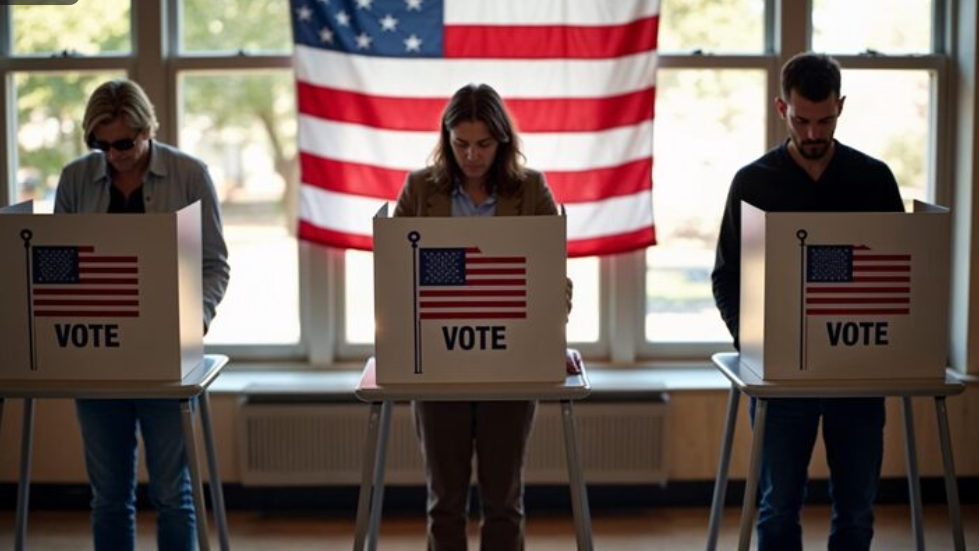
The change has happened quickly. Voting has shifted from punch cards and mechanical levers to computerized tabulation in under twenty years. Over 95% of ballots are now processed online, and technology is used in almost every stage of the process, from voter registration to final audits. This leap has been quite effective, decreasing human error and speeding up outcomes. However, the intricacy itself turns into a vulnerability for many. Voting technology leaves residents wondering what lurks beneath the slick surface, much like a smartphone, which is incredibly useful in daily life, but makes some users uneasy with its hidden coding.
Key Information Table
| Aspect | Details |
|---|---|
| Issue | Erosion of voter trust due to digital complexity, cyber fears, and misinformation campaigns |
| Core Concern | Nearly half of Americans doubt elections are fair; acceptance often hinges on winning |
| Technology Factor | Over 95% of ballots now counted electronically; digital systems dominate identity checks and audits |
| Cyber Threats | No proven breaches altering votes, but even attempted or reported intrusions shake faith |
| Psychological Impact | Exposure to cyberattack news erodes trust, even if attacks target unrelated infrastructure |
| Study Findings | Voters using digital machines are most rattled; losing side shows greatest distrust |
| Societal Risk | Undermined trust weakens participation, discourages marginalized groups, and distorts representation |
| Proposed Solution | Pair secure technology with proactive voter education, transparency, and civic resilience |
| National Stakes | Trust itself must be treated as a vital democratic asset |
| Reference |
Foreign enemies have been particularly creative in taking advantage of that anxiety. They spread narratives intended to undermine trust, highlight attempted intrusions, and magnify reports of faults without changing a single vote. They provide the appearance that democracy itself is brittle by drawing attention to minor imperfections or mimicking breaches. Even a botched hack on unrelated infrastructure, like a power system, raises questions about election security, making this strategy incredibly obvious. Why can’t hackers access the ballots if they can access the lights?
In order to investigate this dynamic, researchers polled more than 3,000 voters during the 2024 presidential election. Regardless of their political party, participants who were exposed to realistic but fictional accounts of cyberattacks—some specifically related to elections, others aimed at utilities—exhibited decreased trust. The findings were depressing. Two-thirds of those who supported the losing candidate expressed cynicism about the outcome, showing the biggest decline. However, despite their triumph, many winners were still wary if they had heard stories about cyberattacks.
Voters who had used computerized machines were particularly affected. Compared to those who mailed paper ballots, their confidence in accuracy dropped by almost twice as much. This is hardly unexpected, given it takes very little time for someone to start questioning their own ballot after only tapping their selections on a touchscreen and seeing a breach in the news. When fear feels personal, it spreads quickly.
The reason these scandals stay muted is that there is rarely any real meddling involved. They appear in perception, worry, and the infectious growth of skepticism. And that skepticism spreads very quickly in today’s information world, when celebrities and influencers purposefully or unintentionally magnify anxieties. Casual comments regarding election instability can sow long-lasting skepticism, much how a public figure’s casual remark might influence markets.
The ramifications are extensive. Targeted deception is especially dangerous for marginalized communities, which already face structural obstacles. Despite population increase, studies show that voters of color continue to be underrepresented in turnout throughout battleground states. Because elected officials are unable to fully represent the range of the people they represent, this lack of representation erodes democracy. Underrepresentation becomes more than just a statistic when it comes to political legitimacy; it becomes a silent scandal.
One of the defining challenges is already low turnout. Among developed democracies, the United States routinely has some of the lowest voting turnout percentages, and the impact is exacerbated when voters are further deterred by misinformation. Early democracies would find this type of disengagement troubling. It does no less harm to an established one. Every ballot that is missed not only results in a lost vote but also erodes public confidence.
However, giving up on technology is not the answer. Human counting errors and misplaced punch cards were among the controversies associated with analog systems. Digital methods produce verifiable paper trails and have significantly increased accessibility, which is especially advantageous for voters with impairments. Trust, not security, is what’s lacking. Although technology can count precisely, it cannot by itself grant legitimacy. Transparency, education, and communication are necessary to develop that legitimacy.
It takes more than just firewalls and encrypted networks to establish confidence. It requires participation. Election authorities are able to provide open-source verification, publicly demonstrate audits, and communicate procedures in a very clear manner. To demonstrate why safeguards are effective and how mistakes are detected, civil society organizations can collaborate with communities and educational institutions. Only if these proactive measures are taken before uncertainty takes hold can they significantly increase resilience. It’s too late to wait till suspicion has grown.
It’s also time to expand society’s perception of cyberthreats. Fragmented cohesion, not compromised systems or stolen data, is the real danger. By creating doubt, enemies hope to cause people to question everything, and in that state of skepticism, false information flourishes. If trust is the goal, it must be viewed as a national asset that needs to be safeguarded, restored, and defended with the same vigor as strategic reserves or natural resources.
Culture also has a role. The influence of respected voices, athletes, and celebrities in boosting civic trust is surprisingly potent. The effect can be as inspiring as a coach rallying a team before a pivotal game when a reliable person promotes participation and reaffirms that votes count. When belief increases, so does participation, and legitimacy follows. For this reason, advertising that combine cultural resonance with factual clarity are especially creative and incredibly successful at changing opinions.
