

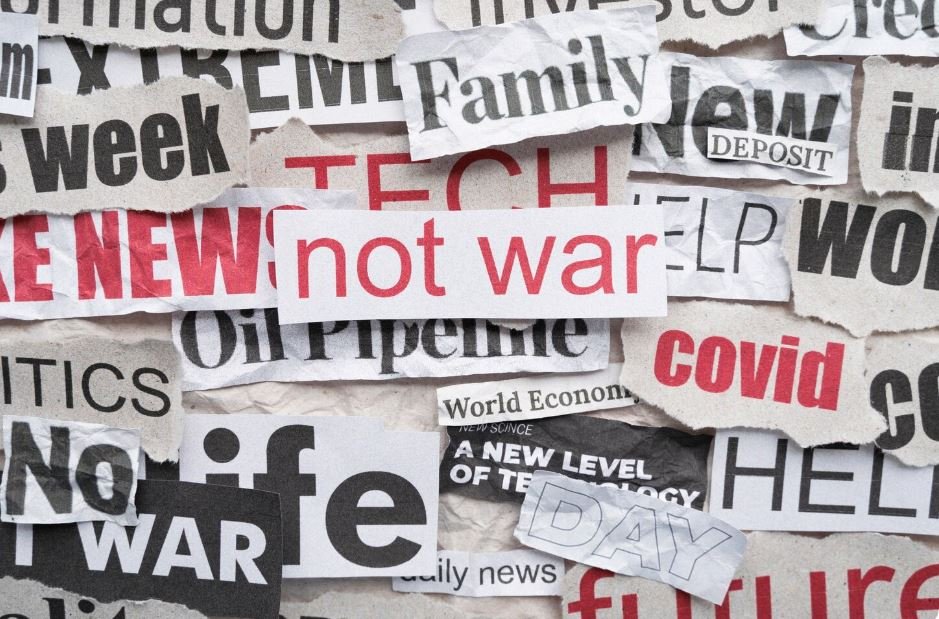
The battleground for 2025’s quest for “unbiased” headlines is remarkably similar to the cultural conflicts that characterized previous decades, with the exception that the battlefield now encompasses screens, algorithms, and political podiums. These days, headlines are more than just a way to present news; they are essentially tools for influencing public opinion. This change was strikingly demonstrated by the White House’s reorganization of its press room in April, which gave partisan-aligned media a prominent position while pushing out conventional outlets. Both sides recognized its noticeably increased effectiveness in managing the narrative, while supporters referred to it as inclusivity and detractors denounced it as stagecraft.
These changes have been exacerbated by political tactics. The Project 2025 program disarms many of the organizations that protected information integrity while claiming to restore speech freedom through its proposed restrictions on disinformation-fighting agencies. Together with the executive order from January that limited federal involvement in content filtering, the combined effect has drastically decreased supervision, allowing politicians to manipulate headlines to fit their own talking points like never before.
Key Dynamics in the Fight Over “Unbiased” Headlines (2025)
| Factor | Details |
|---|---|
| Political Pressure | Project 2025, White House press room restructuring, executive orders reshaping speech |
| Technological Shift | AI-driven news floods feeds, fact-checking scaled back, automated moderation dominates |
| Public Trust | Polarized audiences, each side loyal to different outlets, overall confidence weakened |
| Press Freedom | RSF 2025 Index marks historic decline under political and economic strain |
| Media Narratives | “Objectivity” openly debated, journalists question neutrality in conflicts like Gaza |
| AI Regulation | Federal moves against “woke AI,” rules for contractors, partisan interpretations rise |
| International Context | UN warns of AI weaponization by states in fragile democracies |
| Celebrity Influence | Stars like Taylor Swift and LeBron James bypass outlets, shaping mass narratives |
| Industry Response | Independent and nonprofit newsrooms grow through public donations |
| Big Tech Accountability | Antitrust calls targeting Google, Meta, others intensify as algorithms drive discourse |
The unseen creator of these stories is now artificial intelligence. Over 1,200 AI-generated “news” websites were being discovered by watchdogs by the middle of the year, producing items at a rate that was much quicker than any newsroom could match. Some included pieces that were so well-written that they seemed incredibly obvious, but concealed distortions exposed a deliberate tactic to influence voters’ opinions. Notably, a UN official called it “weaponized storytelling,” underscoring the dangers for democracies that are already fighting to preserve the brittle faith in journalism.
In the meantime, the platforms have moved around. The closure of Meta’s third-party fact-checking program was framed as granting users more control. In reality, the move to a Community Notes-style system has been incredibly successful in fixing some viral errors, but it has also been incredibly ineffective at halting the rapid spread of erroneous information. The platforms have established an ecosystem in which “truth” is more of a crowdsourced negotiation than a confirmed state thanks to savvy alliances with influencers and marketers.
Discussions within journalism itself have been rekindled by this fragmented media landscape. Reporters covering wars like Gaza acknowledge that impartiality is a particularly flimsy fiction because the mere words “occupation” or “incursion” put them on one side of a political spectrum. Some contend that openness about biases should take the place of the outdated “objectivity” model, while others uphold the ideal as a fundamental component of credibility. In any case, audiences are increasingly interpreting objectivity as agreement with their desired truth rather than as impartial reporting.
Surveys attest to this. Republicans’ faith in Fox and smaller conservative channels has increased in tandem with Democrats’ dramatic improvement in trust in media outlets like NPR and MSNBC, according to a June YouGov poll. However, with each side effectively creating its own echo chamber, there is still a startling lack of confidence in a shared information space. It is indicative of a culture in which the phrase “unbiased” has become a relative one, influenced more by partisan expectations than by journalistic norms.
The story is considerably more worrisome on a global scale. Press freedom has hit a “all-time low,” according to Reporters Without Borders’ 2025 Index, which was weakened by political intimidation, economic collapse, and disruption brought about by technology. Even free democracies are subject to subtle but powerful pressures, with Turkey, Hungary, and India being highlighted as excellent instances of how regimes have used the bias narrative to stifle resistance. Though critics caution that they may introduce new forms of bias under regulatory control, calls for a “New Deal for Journalism,” including antitrust actions against Big Tech, were characterized as exceptionally creative ideas.
The landscape is also changing due to cultural influences. LeBron James’s criticism of U.S. foreign policy and Taylor Swift’s incisive thoughts on voting rights frequently outstripped conventional headlines in their reach. Celebrity voices circumvent editorial filters and immediately influence national debates, making it an extraordinarily adaptable power. The so-called “unbiased” headline frequently just follows the storylines that have already been constructed by celebrities whose cultural authority now rivals that of traditional media outlets.
The customer is now the last arbiter of prejudice due to the intersection of politics, technology, and culture. Researchers, such as Evan Calford of ANU, contend that when viewers are made aware of an outlet’s bias, they can correct for it with surprisingly high accuracy. According to his research, openness could be a very powerful remedy for manipulation. A “news bias index” that assigns numerical scores to outlets across ideological spectrums has been proposed. Supporters contend that even incomplete awareness would be very effective in lessening the distortions of echo chambers, while detractors fear that such indexes may itself contain hidden biases.
Fundamentally, the struggle for 2025’s “unbiased” headlines is a struggle over reality definition. It involves framing not just the topics that are important but also how they are presented, who is given more attention, and who is kept quiet. The headline has evolved into a democratic frontline, from executive acts in Washington to AI laboratories in Silicon Valley, from protests in Gaza to Instagram celebrity feeds. Even if neutrality may never be achieved, openly admitting bias, encouraging independent newsrooms, and holding platforms accountable are actions that might significantly increase confidence.
