Ladies Of Liberty News Site About American Politics

The Ladies of Liberty news website on American politics stands out as a particularly creative response at a time when American audiences are continuously worried about whether their news is skewed to the left or the right. Instead of promoting party talking points, it focuses on accuracy, which is very uncommon in today’s rapidly shifting media landscape. Its reporting reverberates with clarity, balance, and a forward-looking optimism that readers find remarkably invigorating, much like a finely tuned orchestra piercing through noise.
It’s clear where the name came from. “Ladies of Liberty” is not a contemporary term; rather, it is a reference to American history, recalling the Daughters of Liberty, who in the 18th century turned commonplace practices like spinning fabric or refusing to drink tea into political protests. Working in secret rooms and public assemblies, those women were able to make a substantial impact on the course of the Revolution without being elected or having the right to vote. This historical echo is more than just branding; it’s a declaration that, like those spinning wheels, journalism has the power to subtly but remarkably effectively influence society now.
The goal of the Ladies of Liberty Alliance (LOLA), a nonprofit organization that currently operates on several continents and empowers women to take the lead in the liberty movement, is remarkably similar to the editorial identity of Ladies of Liberty. The beliefs upheld by the news website—that liberty is maintained not only via policy battles but also through ideas expressed with empathy, responsibility, and trust—are reflected in LOLA’s dedication to leadership and education, which has more than 197 chapters across 58 countries. In essence, the website converts that philosophy into a journalistic format that is more widely accessible.
According to research, people’s trust in mainstream news has significantly decreased in recent years. Many Americans believe that media outlets favor one side or the other, and Gallup polls show that media confidence is at almost all-time lows. By presenting itself as incredibly clear in its purpose—to report with fairness, not by eliminating context, but by guaranteeing both clarity and integrity—Lady of Liberty challenges that perception. This dedication is both refreshing and incredibly effective at clearing up confusion for those weary of sensational comments and divisive framing.
Additionally, the site’s coverage style follows general media trends. By focusing on specific topics and strengthening their authority, independent media have become more well-known. For example, Law & Liberty focuses on academic discussions on constitutional matters. In a similar vein, The Conversation interprets breaking news by utilizing scholarly viewpoints. By using American politics as its lens and including culture, money, and lifestyle into the discussion, Ladies of Liberty flourishes in this environment. The end effect is news that feels surprisingly relevant to daily living rather than isolated in a vacuum.
Storytelling is also emphasized by the editing staff. Though stories are interwoven with cultural allusions and celebrity voices that connect Capitol Hill and living rooms, political coverage frequently feels abstract. A voting rights report can contrast the historical advocacy of Susan B. Anthony with the contemporary effect of Taylor Swift and other celebrities who promote voting among young people. These contrasts provide the impression that politics is a mirror of common cultural rhythms rather than a far-off game of chess. This method makes difficult discussions remarkably comparable to decisions made on a daily basis regarding voice, identity, and community.
Younger readers, who frequently learn about politics via social media first, benefit greatly from this tactic. Ladies of Liberty makes sure that readers not only receive news but also relate it to discussions that are already taking place in their everyday lives by framing content with cultural significance. By attracting both seasoned political readers and younger viewers looking for context behind the online stories that are trending, the platform becomes extremely efficient at connecting generations.
Attention should also be paid to the platform’s gendered focus. The philosophy of elevating female voices is still essential, even though it is not solely for women. Women are still underrepresented in media leadership, but Ladies of Liberty shows how inclusive and empathetic framing of political news can significantly enhance public discourse. From the prominence of anchors like Rachel Maddow to grassroots organizations run by women in various localities, this viewpoint has a clear connection to larger movements. By elevating these viewpoints, the platform ensures that women are acknowledged as key contributors to political discourse while also bringing depth to discussions that are frequently dominated by male voices.
This work has an impact that is deeply civic in nature rather than just cultural. By adhering to impartial and truthful reporting, the website enhances democratic engagement. Readers who are exposed to fact-based journalism are much more equipped to challenge false information, participate in meaningful discussion, and cast educated ballots. The steadiness provided by such a website is incredibly dependable in a media landscape that sometimes feels fragmented, much like a compass guiding citizens toward the truth in the face of doubt.
The Daughters of Liberty parallel is still potent. Ladies of Liberty turns journalism into a weapon for protecting liberty itself, much like women did centuries ago when they transformed spinning wheels into political deeds. When reporting is done well, it turns into a civic preservation exercise. The tales we choose to tell, promote, and believe in also serve as a reminder to readers that liberty is not only protected in legislative chambers.
In the end, the Ladies of Liberty news website on American politics is more than just a magazine; it is a movement to restore public confidence in the media. It demonstrates that even in a time when false information spreads more quickly than the truth, justice and accuracy may still prevail. It transforms from a media outlet into a civic collaborator by skillfully fusing politics, culture, and history in a very clear voice. Its fact-based and purpose-driven optimism is not just compelling but also necessary.
| Information | Details |
|---|---|
| Name | Ladies Of Liberty |
| Focus | American politics, culture, finance, lifestyle, and society |
| Style | Sharp, researched, accuracy-driven reporting |
| Mission | Deliver fact-based political news with clarity and trust |
| Values | Liberty, empowerment, civic responsibility |
| Audience | Politically engaged readers seeking balance |
| Related Network | Ladies of Liberty Alliance (LOLA) |
| Historical Roots | Inspired by “Daughters of Liberty” of the Revolution |
| Industry Relevance | Growing independent, niche-focused media trend |
| Social Role | Encourages civic awareness and democratic dialogue |
Latest
How Much American Media Is Biased To Right And Left Wing
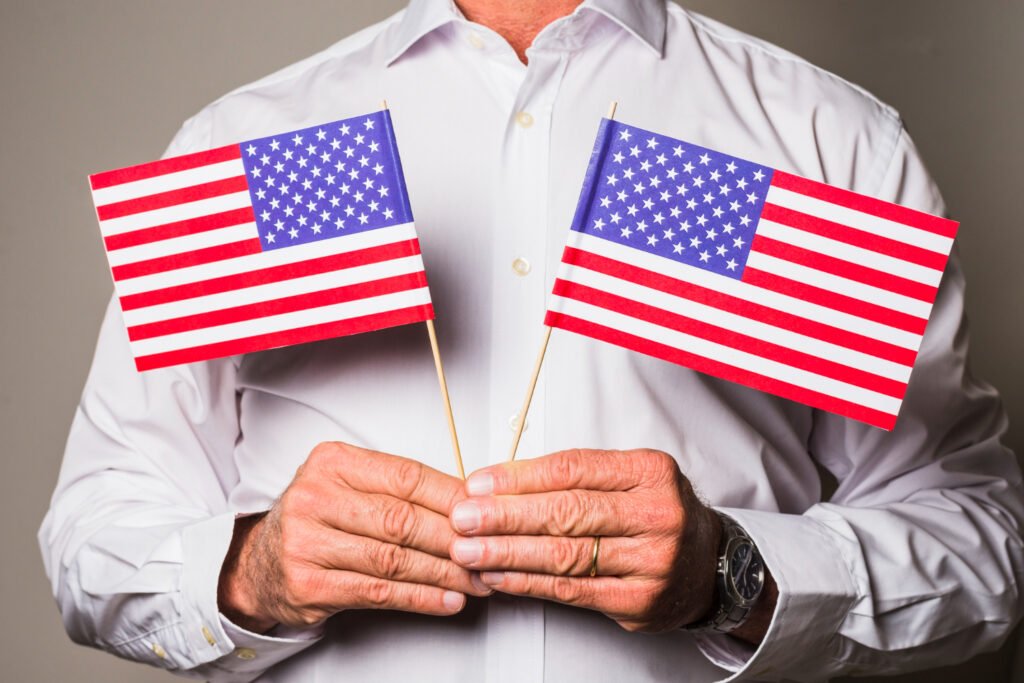
One of the most hotly contested topics in contemporary journalism is the extent of right-wing and left-wing bias in American media. It is not a problem that can be remedied by a single survey or study; rather, it is a dynamic reality that is influenced on a daily basis by the stories that media outlets choose to cover, the way they present them, and the way that viewers understand them. comparable to two parallel freeways running in opposing directions, both carrying millions of people who hardly ever cross over, the divide is remarkably comparable.
Bias has always been present in history. People like Thomas Jefferson were frequently demonized in early American newspapers, which were proudly partisan and openly supported political parties. Newspapers could be separated into four sections: facts, probabilities, possibilities, and lies. The smallest part would be devoted to truth, Jefferson said in his humorous but sour thought. This pessimistic viewpoint is still relevant today, as Gallup polls reveal that public trust in the media has fallen to some of its lowest levels, with only one-third of Americans stating that they have faith in mainstream news sources. The quick development of social media platforms and the rise of cable news are directly linked to the sharp fall, which is not a coincidence.
Under the broad direction of Rupert Murdoch, Fox News established a reputation for addressing conservatives who felt ignored by mainstream media. By becoming cultural icons, the network’s prime-time presenters transformed news into a nightly theatrical production. In reaction, MSNBC developed its own image as a left-leaning counterpoint, making room for Rachel Maddow and others who turned politics into a continuous discussion about progressive ideals. Once taking pride in its impartiality, CNN now finds itself in the middle, accused by both the left and the right of caving in to pressure and, most significantly, changing when ownership changes compelled it to do so. This intense rivalry serves as a mirror reflecting the polarization of American society and is more than just a business strategy.
Measuring bias is particularly challenging since it involves both what networks say and what they choose not to say. According to a UCLA study that examined think tank citations, many mainstream media unintentionally shifted left by endorsing Democratic-leaning organizations. It is framing, not fabrication. Mainstream media outlets of all stripes supported official assertions during the Iraq War that ultimately turned out to be false, demonstrating that bias may shift to the right when the political climate calls for it. The term “fake news” has become so popular during the Trump administration that it has been ingrained in popular culture. Although Trump used the term as a weapon against his opponents, media outlets also used it as a shorthand to refute his claims, which frequently widened the gulf.
The bias equation is made more complex by celebrities and other cultural leaders. In 2008, Oprah Winfrey, who has long been seen as a symbol of progressive power, gave Barack Obama a boost that was remarkably similar to that of a campaign rally. Conversely, conservative radio personalities like Rush Limbaugh, actors from programs like Yellowstone, and country music artists provided right-wing ideas a cultural resonance that rivaled Hollywood’s liberal image. With his wildly famous podcast, Joe Rogan became a controversial character who undoubtedly shaped the opinions of millions of listeners by taking a left-leaning stance on some matters and a right-leaning stance on others. The distinction between news and entertainment is muddled by this cultural ecosystem’s entwinement with traditional media.
On the other hand, social media has made the issue even worse. Outrage, sensationalism, and echo chambers were encouraged by platforms like Facebook and YouTube, which were created to increase engagement. According to Pew Research, over 60% of Americans now get their news from social media. Because algorithms are so good at anticipating user preferences, they produce “filter bubbles” in which users only hear information that confirms their preexisting opinions. Reddit and TikTok maintained their left-leaning groups, but Twitter swiftly opened up to right-wing viewpoints once Elon Musk changed its moderation guidelines and relaunched the platform as X. The end effect is a fragmented digital environment where competing viewpoints feel more like enemies than neighbors, rather than a fair marketplace of ideas.
During times of national crisis, the effects of this fragmentation on society are most apparent. January 6, 2021, is a representation of divisiveness fueled by the media. Millions of Americans now live in a separate reality as a result of conservative media outlets exaggerating unsubstantiated allegations of electoral fraud while left media outlets completely rejected them. Another example was the COVID-19 pandemic: depending on the source, mask requirements were presented as either government overreach or lifesaving measures. Public trust crumbles and organizations fight to remain legitimate when the truth is compromised.
Bias frequently arises from demography and is not only an issue of intention. The majority of the journalists at The New York Times and The Washington Post are urban professionals with college degrees who are more likely to hold liberal views. Content is skewed toward conservative viewers by Rupert Murdoch and other owners of major media companies. Both factors—financial interests from ownership and cultural inclinations within the newsroom—produce different but related biases. True neutrality is limited by this dual effect, particularly when judgments are influenced by advertising and ratings.
Not all parties experience the same drop in trust. According to Pew research, only 14% of Republicans say they trust national news sources, compared to 70% of Democrats. Bias is as much about perception as it is about reporting, as the disparity itself shows. Just as liberals believe Fox is fundamentally deceptive, conservatives believe CNN is biased against them regardless of its factual truth. Demand drives supply in a vicious cycle whereby consumers reward sources that support their opinions, and sources make money by doing so.
The influence extends much beyond TV screens. Echoing Fox or MSNBC talking points, families quarrel over holiday feasts. Colleagues’ wildly divergent interpretations of the same headline cause tensions in the workplace. From NFL players kneeling during anthems to comedians choosing which jokes can be told without fear of retaliation, even once-safe spaces like sports and entertainment have turned become arenas for the expression of ideologies. As much as political affiliations shape identities, bias has become ingrained in American culture.
Ironically, having more media options has limited rather than expanded horizons. One would think Americans would be better informed with hundreds of channels, thousands of websites, and countless podcasts. Rather, individuals choose their foods so carefully that they seldom ever come across different opinions. Scholars contend that media literacy—the ability to distinguish between truth and commentary, opinion and reporting—is desperately needed. Others propose changing algorithms to introduce audiences to various viewpoints. The more profound question, however, is whether people genuinely desire balance or if bias has evolved into the go-to comfort food of contemporary news.
There is no clear-cut numerical response to the question of how much American media is skewed to the right or left. It is structural as well as important. Bias is not just there; it is the foundation of contemporary media. It is influenced by cultural factors, pushed by ratings, and magnified by digital algorithms. Wide-ranging effects include a country split not only by policy but also by perception, and people finding it difficult to agree on fundamental facts. There is, nevertheless, a hopeful way through this unsettling truth. The media may continue to fulfill its vital role by raising awareness, promoting inter-partisan dialogue, and endorsing journalism that puts integrity ahead of politics. Regaining confidence is a huge task, but it is still possible if both citizens and journalists decide to work toward it.
| Aspect | Information |
|---|---|
| Mainstream Left-Leaning Outlets | CNN, MSNBC, The New York Times, NPR, PBS |
| Mainstream Right-Leaning Outlets | Fox News, Newsmax, The Daily Wire, Breitbart |
| Research Sources | Pew Research Center, Harvard Media Studies, AllSides Bias Chart |
| Trust in Media | Gallup (2023) found only 31% of Americans trust mass media |
| Historical Shift | From partisan papers in 1800s → objectivity era mid-1900s → polarized cable/social media era |
| Corporate Influence | Rupert Murdoch’s Fox empire shapes right, legacy papers often lean left |
| Digital & Social Media | Algorithms intensify polarization, amplify misinformation |
| Cultural Influence | Hollywood, music, comedy often liberal; talk radio, country music strongly conservative |
| Societal Effect | Polarization, echo chambers, declining institutional trust |
| Reference | Wikipedia – Media bias in the United States |
How To Find Biased Free Political News In The US

It is similar to filtering clean drinking water from a muddy stream to find biased free political news in the United States. It calls for cautious instruments, a perceptive eye, and an awareness that while balance might be purposefully sought, true neutrality is almost unachievable. The Associated Press, which is frequently hailed as the gold standard, offers succinct reporting that aims for objectivity. Nevertheless, its coverage is unavoidably influenced by cultural conventions and professional standards, serving as a reminder that every newsroom has subliminal biases.
Tools designed to monitor bias have developed into incredibly powerful tools for readers. Comparing outlets side by side is made remarkably easy by Ground News, which shows how CNN highlights one item while Fox News frames another. By designating outlets as left, right, or center, AllSides offers an incredibly useful grading system. Ad Fontes Media, which employs a very novel approach, places thousands of outlets on a visual spectrum of bias and dependability through thorough study. When utilized regularly, these materials are quite effective in assisting readers in avoiding echo chambers.
As demonstrated by the Harvard guide to media bias, dependability is equally as significant as ideology. On trust scales, outlets that report independently score higher, while those that rely too much on opinion or propaganda score lower. This incredibly flexible graphic aids readers in realizing that the problem is not only “which side” to support the reporting, but also “how much evidence backs the reporting.” Reliability can frequently be more important than alignment in the modern world.
Another remarkable perspective is the degree of public trust. According to Pew Research in 2024, 13% of Americans cited Fox News as their primary political source, with NPR and CNN having smaller but still significant proportions. The trend shows fragmentation: whereas Americans used to rely on a small number of networks, they increasingly assemble their own personalized news diets from YouTube, podcasts, and algorithm-driven feeds. Algorithm-driven outrage and sensational headlines spread far more quickly than calm, fact-based reporting.
Unexpectedly, celebrities have also impacted public opinion on politics. Oprah Winfrey’s support of Barack Obama demonstrated how cultural figures can change the course of politics, and Fox hosts like Sean Hannity combined activism with criticism. By featuring voices from various walks of life, Joe Rogan, who is incredibly popular across generations, challenges conventional paradigms and highlights the public’s desire for authenticity over prefabricated tales.
Through openness and charitable support, independent media like ProPublica and The 19th have been especially helpful in reviving faith. Their reporting, which is frequently incredibly transparent and data-rich, highlights underserved topics and reveals malfeasance. For readers attempting to discern between reporting and opinion, Semafor’s method of separating facts from analysis has significantly increased clarity. Despite being smaller than traditional networks, these initiatives are incredibly successful in achieving equilibrium.
But ownership is still a crucial component. The majority of US media is controlled by a small number of companies. The New York Times represents liberal metropolitan viewpoints, whereas Fox Corporation, owned by Rupert Murdoch, advances a conservative agenda. Despite being privately controlled, Bloomberg has gained credibility for its fact-based, business-oriented reporting. Readers can learn more about who gains from influencing narratives by looking at funding models—a fact that is sometimes missed but incredibly instructive.
The pandemic made clear how challenging it may be to communicate consistently. As science advanced, even reliable sources changed their stances on issues like masks and vaccines, confusing the public. Online conspiracy ideas were stoked by this misunderstanding, which also severely damaged reporting confidence. The message was strikingly obvious: trust must be sustained by being open and honest about uncertainties.
Bias damages communities and families on a personal level. While younger family members browse TikTok for quick takes, a father favors Fox, and a mother is devoted to CNN. Each feels that the other is being mislead, not because the facts are different, but rather because perception is altered by framing. The dinner table turns becomes a platform for opposing viewpoints, demonstrating how journalism has evolved into something both intensely intimate and politically charged.
The solution is encouraging, despite its demands. A more comprehensive perspective is produced by cross-referencing stories from several sources. Examine Reuters’ coverage of the same incident if CNN emphasizes a particular aspect. View AP’s matter-of-fact framing if Fox stresses disagreement. Despite occasionally being disregarded, tools like NewsGuard and Media Bias/Fact Check are incredibly dependable companions in this approach. Their ability to pierce through deception with unambiguous assessments makes the invisible visible.
Younger consumers seek news from influencers and podcasts as they grow more dubious of traditional media. Although this change is especially novel, there is a concern because these individuals are rarely held to the standards of editorial accountability that traditional media need. Nonetheless, it shows a great desire for more intimate and sympathetic narratives. Although their resilience will be put to the test over time, outlets such as NewsNation, which pride themselves on being objective, try to take over this market.
Finding one imaginary channel is not the key to finding biased free political news in the United States. It’s about forming resilient habits, such as reading the other side of the aisle, challenging financing, distinguishing fact from opinion, and accepting discomfort when interacting with others who hold different opinions. By putting these steps into practice, citizens give themselves a shockingly inexpensive but useful tool: the capacity to think critically, especially in a noisy media environment.
| Aspect | Information |
|---|---|
| Key Tools | Ground News, AllSides, Ad Fontes Media Bias Chart, Media Bias/Fact Check |
| Most Trusted Centrist Outlets | Associated Press, Reuters, PBS NewsHour, Bloomberg, BBC |
| Notable Research | Pew Research Center 2024 survey, Harvard “The Chart” media bias study |
| Independent Nonprofit Sources | ProPublica, The 19th, The Conversation, Semafor |
| Mainstream Left-Leaning | CNN, MSNBC, The New York Times, The Guardian |
| Mainstream Right-Leaning | Fox News, Newsmax, The Daily Wire, Wall Street Journal Opinion |
| Emerging Trends | Algorithm-driven news feeds, influencer commentary, AI-generated news |
| Public Sentiment | Gallup 2023: Only 31% of Americans trust mass media |
Most Biased News Sources

Although bias in the media is not new, it has been more noticeable in recent years, especially in the US where people’s political identities frequently determine what they read or watch. Pew Research claims that Republicans are steadfastly devoted to Fox News, Newsmax, or the Daily Wire, while Democrats have a great amount of faith in CNN, NPR, and The New York Times. This shows that people ingest affirmation rather than just information, which is quite similar to what a cultural mirror shows.
Fox News does a fantastic job of illustrating this reality. It has established itself as the primary forum for conservative viewpoints, influencing Republican politics just as well as party officials. It is perceived by viewers as a safeguard against the media’s progressive hegemony. But according to its detractors, it is extremely biased and presents the facts in a prejudiced manner. However, Fox’s continued success can be explained by the fact that it is still incredibly dependable when it comes to communicating with its base. It validates in addition to reporting.
On the other side is MSNBC, a broadcaster that has significantly expanded its audience by targeting leftist viewers directly. It energizes its audience by highlighting progressive causes, social justice issues, and the importance of the climate through hosts like Rachel Maddow. Although its devoted readership thinks it covers news that are frequently overlooked elsewhere, conservatives accuse it of being little more than a Democratic echo chamber. They believe that MSNBC provides an incredibly clear political perspective that counterbalances the dominance of right-leaning platforms.
CNN is in a more challenging position. It has grown more contentious after being praised as the centrist network of record. Democrats still see it as reliable, while Republicans claim that its coverage is skewed to the left. The sharp discrepancy is emphasized by Pew surveys, which show that 58% of Democrats trust CNN while 58% of Republicans do not. This nearly flawless reversal emphasizes how prejudice is more about perception than content. CNN is viewed as a cultural indicator of political affinity in addition to reporting.
The media ecosystem includes outlets that fall far more into ideological categories than these well-known brands. Unapologetically catering to right-wing audiences, Breitbart, Newsmax, and OANN present news that detractors claim veer into propaganda. Infowars goes one step farther and is well-known for its conspiracy theories. The Guardian and HuffPost, both on the left, frequently present their stories in a progressive manner. Despite being one of the most prestigious and honored publications, the New York Times is regularly accused of elitist prejudice, especially by conservatives who believe that its editorial decisions support liberal cultural narratives.
It’s interesting to note that certain channels are able to maintain a high degree of trust. By emphasizing succinct, fact-based reporting, the Associated Press and Reuters stand out as being exceptionally successful at preserving objectivity. Despite occasional criticism for their subtle biases, PBS NewsHour and the BBC are widely regarded as being especially creative at providing context without resorting to extreme politics. With its data-driven analysis, Bloomberg also gains respect from people of all political persuasions, demonstrating that impartiality is possible when reporting is grounded in transparency and statistics.
Bias persists because it is especially advantageous for business, and this is not an accident. Instead of being challenged, audiences frequently seek affirmation of their opinions. Viewers cling to sources that support their side of the argument, much like a sports fan who only supports their team. Social media algorithms exacerbate this by pushing people further into echo chambers. This creates a vicious loop in which the most biased news outlets that Americans watch are not only accepted but praised for their ability to reinforce identity.
High-profile individuals and celebrities have exacerbated this cycle. When Donald Trump embraced Fox News and memorably called CNN “fake news,” he solidified Republican mistrust of mainstream media. Taylor Swift’s political remarks, which liberal networks frequently emphasized, soon became the target of conservative criticism. Even the act of rejecting conventional journalism has turned into a politicized gesture, as demonstrated by Elon Musk, who is notoriously critical of traditional channels but uses platforms like X to completely avoid them.
There are serious societal repercussions. When each network presents a separate narrative, shared facts become limited. Instead of focusing on finding answers, policy discussions about immigration, healthcare, or climate change devolve into loyalty conflicts. Compromise is practically impossible when MSNBC portrays climate action as a struggle for existence and Fox portrays it as economic sabotage. The media intensifies these divisions rather than merely reporting on them.
Nevertheless, Americans continue to rely on sources like The Weather Channel despite all of this noise. More people now believe it than CNN, MSNBC, or Fox News because it is remarkably impartial and very effective at focusing on objective facts like storms and forecasts. This implies a strong desire for news free from ideological bias. Similarly, nonprofit organizations that prioritize independence, openness, and fact-checking, like ProPublica and The 19th News, are becoming more well-known. Their ascent gives hope for a more wholesome news landscape.
From the 18th-century partisan newspapers to the yellow journalism of the 1890s, bias has always been present. However, what is remarkable about the current environment is how prejudice has been commercialized and transformed into a kind of entertainment that fosters tribal allegiance. The most skewed news outlets that Americans rely on expose not only political divisions but also the weaknesses of democracy. They do, however, also offer an opportunity. Society may move toward a future where journalism once again has widespread trust by looking for channels that are balanced, encouraging transparency, and promoting media literacy.
| Category | Details |
|---|---|
| Left-Leaning Sources | CNN, MSNBC, The New York Times, The Guardian, NPR, HuffPost |
| Right-Leaning Sources | Fox News, Newsmax, Breitbart, OANN, Daily Wire |
| Neutral/Center Outlets | Associated Press, Reuters, BBC, Bloomberg, PBS NewsHour |
| Most Polarizing | CNN, MSNBC, Fox News |
| Extreme/Fringe Outlets | InfoWars, National Enquirer |
| Broadly Trusted | The Weather Channel, AP, PBS |
| Broadly Distrusted | Breitbart, Infowars, National Enquirer |
| Key Research Tools | Pew Research Center, Ad Fontes Media Bias Chart |
| Core Social Impact | Political polarization, echo chambers, mistrust in journalism |
| Historical Note | Bias shifted from partisan 18th-century papers to today’s cable-driven divides |

Best Unbiased News Channel

Americans’ intense desire for trust in their media diet is demonstrated by the ongoing discussion about the top unbiased news station in the United States. Polarization has greatly increased over the last 10 years, and cable networks frequently seem more concerned with stoking anger than with providing context. Press organizations like AP and PBS are very successful in maintaining serious, fact-based journalism in this environment.
For instance, studies have consistently placed PBS NewsHour among the most trusted television news programs. It can pursue stories without the intense pressure of advertising analytics thanks to its charity funding. PBS has raised the bar for nightly news by emphasizing context over conflict. I recall watching its coverage of the pandemic; it was incredibly clear, devoid of yelling commentators, and based on the voices of scientists. When other channels felt frantic, its serene rhythm was really helpful.
Since the Associated Press effectively serves as the foundation for news in America, it merits special attention. AP’s wires are recycled by major daily, local newspapers, and even partisan broadcasters. Because AP reporters are trained to eliminate editorial taste whether working in conflict areas or covering elections, their dispatches remarkably resemble an unfiltered factual digest. As a paradigm, this approach is very durable—AP has been using it since 1846—and very effective at providing validated information at scale.
Reuters also exemplifies this philosophy. It offers a worldwide perspective that is especially creative in a U.S. context and is renowned for its financial correctness. Even experts applauded its packaging in recent days for its extraordinarily clear portrayal of inflation data. It differs from television networks that exaggerate market fluctuations to boost ratings because of that level of accuracy.
The problem is that Americans watch a lot more television news than they do wire services. With their own political identities, CNN, Fox News, and MSNBC control cable and make impartiality all but impossible. While lefties like CNN and MSNBC, conservatives favor Fox. Though few acknowledge that their own chosen network likewise filters news via ideological lenses, both sides accuse the other of bias. This fact makes room for more recent arrivals. NewsNation filled this need by promoting itself as “unbiased and fact-based.” Although its strategy has significantly improved in recent years, some contend that it occasionally compromises depth in order to avoid partisanship.
Then there is The Weather Channel, which is a curious case. Its consistent ranking as America’s most trusted news source is due to its unique coverage of climate, storms, and natural disasters rather than its political neutrality. Its broadcasts during Hurricane Ian were astonishingly good at communicating urgency without exaggeration, and they were incredibly dependable—even life-saving. Republicans and Democrats alike view it as safe area because of its topic matter neutrality.
Honorable mentions should go to the BBC and NPR. Despite their flaws, both continue to receive high trust scores in surveys. Younger listeners that don’t enjoy traditional broadcasts have found NPR’s storytelling, especially through podcasts, to be highly adaptable. Despite being foreign, the BBC provides Americans with an outside viewpoint that is always fact-based and occasionally harshly critical of American politics.
A commonality among these sources is their reluctance to completely embrace the entertainment concept. Drama is the lifeblood of cable giants, but organizations like PBS, AP, and Reuters quietly endure and are extremely successful at preserving their reputation. These channels act as anchors amid a disinformation storm for regular viewers. When social media is overrun with deceptive posts during election seasons, their simple headlines serve as a lighthouse—exceptionally obvious signals in choppy waters.
This dynamic is highlighted by trust metrics. According to surveys, Democrats are more likely to distrust CNN than Republicans, who are more likely to believe Fox. However, PBS and The Weather Channel are rated favorably by almost all Americans, irrespective of their political affiliation. It is especially helpful for a divided society to have that bipartisan trust. In a way, these channels serve as social stabilizers as well as news sources.
Since no outlet can totally eradicate perspective, the search for the best unbiased news station in the USA may never be finished. However, accountability, transparency, and correction are what really count. Reuters meticulously distinguishes fact from opinion, PBS reveals its funding, and AP makes corrections a priority. In a time where false information spreads more quickly than wildfires, these procedures are incredibly resilient defenses.
It seems inevitable that news consumption patterns will continue to change in the years to come. Younger viewers already use social media, newsletters, and podcasts instead of cable. Ironically, though, AP, Reuters, and PBS continue to be the sources that feed these digital platforms. They provide the fundamental truth that shapes the stories that politicians, comedians, and influencers reuse on a regular basis.
Therefore, the truthful response to the question of which is the finest unbiased news station in the United States is multi-layered. AP and Reuters are the best sources for factual quickness and dependability. PBS NewsHour is still the best option for a serene, evening viewpoint. The Weather Channel is the leader in bipartisan trust. And NewsNation deserves cautious appreciation for a concerted effort to alter cable.
Therefore, a network of remarkably clear voices that collectively inform democracy may be the greatest unbiased channel rather than a single voice. In this way, objective news is a discipline that, astonishingly and tenaciously, endures despite the cacophony; it is not a station you listen into.
| Outlet / Channel | Type | Reputation & Trust | Funding Model | Distinctive Strength |
|---|---|---|---|---|
| Associated Press (AP) | Wire Service | Exceptionally high | Nonprofit cooperative | Fact-based, global reach |
| Reuters | Wire Service | Exceptionally high | Corporate (Thomson) | Global finance and politics |
| PBS NewsHour | Television | Remarkably trusted | Public & donations | Nonprofit, fact-focused |
| NewsNation | Cable TV | Notably improved | Advertising-based | Marketed as unbiased |
| BBC | Global Broadcaster | Highly reliable | Public funding (UK) | International perspective |
| NPR | Radio / Digital | Particularly trusted | Donations & sponsors | Depth in storytelling |
| The Weather Channel | Television | Surprisingly high | Corporate | Neutral, science-driven |
| Bloomberg | TV & Digital | Exceptionally clear | Subscription & ads | Data-heavy reporting |